
Altruism is that quiet, almost unglamorous habit of caring enough to make life a bit easier for someone else - even when nobody notices, nobody applauds, and there's no little reward bag waiting at the end. When this quality is underdeveloped, a person can look absolutely fine from the outside: organized, productive, sensible. And still feel oddly sealed off inside. Capable, yes. But a bit emotionally underfed. A bit... airless.
You manage your own life, protect your time, keep your plans neat and your energy budget tighter than a jar lid. Fair enough. But if other people's needs mostly register as inconvenience, background noise, or "not really my thing," there may be something worth looking at here. Especially if helping only makes sense when there's a clear return, or if generosity makes your eyes roll before your hands move. You know that feeling? Yeah, that one.
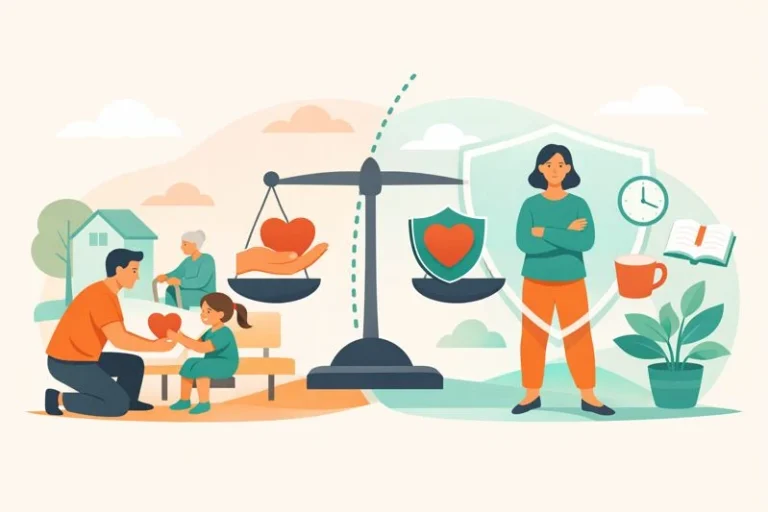
Table of contents:
Altruism: giving that does not keep score
It is not sainthood in comfortable shoes
A lot of people hear altruism and immediately picture some glowing saintly figure who never gets irritated, never needs a nap, and apparently has endless free weekends for noble acts. Lovely image. Useless, mostly. In real life, altruism is much less theatrical. It's the willingness to do something for another person's good without turning the whole thing into a secret invoice. You help because help is needed. Not because you're building social credit, polishing your image, or hoping life will pay you back with interest later.
And no, this does not mean erasing yourself like some tragic side character. Healthy altruism still has edges, limits, a spine. If helping others always means stomping all over your own sleep, money, or sanity, that's not generosity anymore. That's imbalance dressed up in a halo, and honestly, halos can be sneaky.
The inner movement goes outward
One of the clearest signs of altruism is simple attention. Not just to your own deadlines, stress levels, and plans, but to what's happening in other people's lives too. An altruistic person notices strain. They pick up on discomfort. They catch the small stuff many people step around because, technically, "not my problem."
They check in on the friend who suddenly went quiet. They explain something to the new coworker without acting like they've donated a kidney. They offer the seat, the ride, the useful contact, the extra ten minutes. This overlaps a lot with what emotionality actually means, because it starts with seeing another person's state as real - not just decorative background in your own busy day. There's a kind of moral imagination in it, if that phrase doesn't sound too fancy for a Tuesday: the ability to picture what someone else might be going through and let that picture change what you do next.
It usually costs something real
Altruism is not mostly a feeling. It's not "aw, that's sad" and then back to scrolling. It shows up in what a person is willing to give: time, comfort, energy, convenience, money, attention. Sometimes the cost is tiny. Sometimes it isn't.
You stay after the meeting to help sort out the mess everyone else is pretending not to see. You donate the good coat, not the tragic one with the broken zipper and a mysterious smell. You spend part of your evening actually listening to someone who's struggling instead of sending a thumbs-up emoji and calling it emotional support. The sacrifice doesn't have to be dramatic, but there's usually some friction. That friction matters. It's the difference between real care and pleasant sentiment with good lighting.
Most of it happens in very ordinary places
People talk about altruism as if it only appears in heroic situations - disasters, charity galas, dramatic public moments with orchestral music in the background. But most of it lives in kitchens, offices, sidewalks, school runs, inboxes, tired little group chats, all the plain rooms of normal life. That's where it actually earns its keep.
It shows up when someone chooses the less convenient option because it helps another person breathe a little easier. Usually it's steady rather than flashy. Altruistic people don't always make speeches about values. More often, they just lower the burden in a room. Quietly. And yes, they often do feel good afterward. Not because they've been paid, but because being useful in a human way lands differently. Cleaner. Warmer. Like a small lamp switching on somewhere inside.
What life opens up when altruism gets stronger
People trust the atmosphere around you
When altruism grows, people start to sense that being around you is not one long negotiation. They don't have to wonder whether every favor will be remembered later and redeemed at full emotional interest. They relax a bit. They trust you more easily.
In friendships, this creates warmth - the real kind, not the smiley, polished kind. There's also a natural overlap with what gets better when friendliness becomes one of your natural settings, because both make people feel less guarded and more willing to come closer. In families, altruism softens the usual little tensions. At work, it makes cooperation less sticky, less political, less "I'll do my bit if you do yours." Subtle difference, big effect. It's the gap between "Can I ask them?" and "Mm, better not."
Your world stops revolving so tightly around you
This part gets underrated all the time. Altruism can loosen the grip of self-absorption - not in a moral lecture sort of way, just practically. When your thoughts are always circling your own stress, your own image, your own deadlines, life starts to feel cramped. Stuffy. Like living in a room with the windows painted shut.
Helping someone else interrupts that loop. It widens your view. It reminds you that you are part of a larger human mess, not a tiny island defending snacks and calendar slots. A lot of people notice that after doing something genuinely useful for someone else, their inner weather changes. Less rumination. Less stale self-focus. A bit more perspective. Not magic, no. Your taxes still exist. But often there's a real emotional lift - the kind people call a "helper's high," which sounds cheesy until you feel it and go, oh. Huh. There it is.
Teams, homes, and communities work better
Altruism is not just a private virtue tucked away in someone's personality. It changes the systems people live in. A household runs better when people sometimes help because help is needed, not because the fairness spreadsheet has been updated. In ordinary life, that steady contribution often looks a lot like what responsibility looks like in real life, because reliable people reduce chaos instead of quietly adding to it.
A team gets stronger when someone shares useful information, covers a rough patch, notices the new person is drowning and actually does something about it. Communities get less brittle when people contribute without waiting for perfect incentives, applause, or a medal shaped like a star. That doesn't mean self-sacrifice should replace decent systems. God, no. Bad structures don't become healthy just because one kind person keeps mopping up after them. Still, in every group there are gaps. Roles don't cover everything. Altruism fills some of those gaps. It keeps ordinary human life from turning into a cold little machine.
Meaning becomes less abstract and more lived
People go searching for meaning as if it's hiding on a mountain somewhere with an expensive logo and a waiting list. Meanwhile, one of the clearest sources of meaning is embarrassingly close: being of use. Not endlessly useful to everybody within a five-mile radius - that road ends in resentment and weird jaw tension - but genuinely useful in ways that matter.
Altruism gives a person evidence that their presence improves life beyond their own small bubble. That matters for self-respect. It matters for identity too. You stop seeing yourself only as a consumer of time, money, attention, and services, and start experiencing yourself as someone who contributes. That lands deep. A person who knows, "I make things lighter sometimes," tends to carry themselves differently. Softer, maybe. Stronger too. Those two are not enemies, by the way.
When altruism is missing, the damage is quieter than you think
Relationships start feeling transactional
When altruism is weak, every interaction can start to carry a tiny price tag. Sometimes not out loud - which is almost worse. You help if it benefits you, protects your image, keeps the ledger balanced, increases the chance of return. On paper, that can look rational. Mature, even. In real life, it often makes relationships feel dry and oddly brittle.
People notice when your care comes with conditions. They may not announce it, but they feel it. They lean less. Share less. Ask less. They become careful around you. And then comes the strange little irony: in trying so hard not to be used, you can slowly build a life where fewer people feel safe being close. Efficient? Maybe. Warm? Not really.
Other people carry more than their share around you
Low altruism doesn't always look like cartoon selfishness. Sometimes it looks polished, reasonable, almost admirable. "I'm just focused." "I mind my own business." "Everyone should handle their own stuff." Sure - up to a point. But if a person rarely steps in, rarely notices, rarely makes things easier unless asked three times and handed a receipt, the burden doesn't vanish. It just slides onto someone else.
Someone else does the emotional labor. Someone else explains things. Someone else stays late, checks in, organizes, smooths, supports, follows up, remembers birthdays, brings soup, notices the weird tension, asks the necessary question. Over time, people see the pattern. They may never confront it directly. Usually they just downgrade their expectations of you in the human department. That's... not a flattering downgrade.
You can become efficient and oddly empty
Here's the sneaky part. A person can live with low altruism for years and still look successful. Productive. Stable. Respected, even. But inside, life may start to feel thin. If most of your habits revolve around self-interest, comfort, advantage, control, personal optimization - very shiny words, some of them - there's less room for the grounded satisfaction that comes from being meaningfully good to other people.
You get convenience, sure. You get control. Maybe even admiration. But you may also get emotional flatness. Days become a loop of maintenance, advancement, consumption, repeat. For many people, this starts to resemble how feeling lost starts warping everyday life, where everything keeps moving but less and less of it feels alive. Useful, perhaps. Nourishing? Mm. Not always. Human beings tend to do better when care flows outward sometimes. Otherwise the inner life can get stale in a very modern, very well-dressed way.
The root is not always cruelty
This part matters. A lack of altruism does not automatically mean someone is cold, bad, or morally defective. Sometimes the real issue is burnout. Or fear. Or scarcity learned so early it now feels like common sense. For some people it's tangled up with what anxiety and overthinking really are, where every impulse to help gets analyzed to death until the moment passes and all that remains is awkwardness.
And sometimes a person grew up in an environment where generosity got punished, exploited, or laughed at. If helping feels dangerous, draining, or suspicious, of course the instinct may go underground. That makes sense. But understanding the reason doesn't erase the cost. If your default mode is constant self-protection, you may miss chances to connect, contribute, and matter in ways that would actually make your own life richer too. So yes, low altruism has consequences. It doesn't need a sermon. It needs honest attention - and maybe a little courage.
How to grow altruism without becoming everyone's emergency contact
Try one invisible good deed
A very clean way to train altruism is to help where applause can't reach you. Pay for the next person's coffee and leave before the tiny emotional scene unfolds. Cover a small need for someone without attaching your name to it. Leave useful help in your wake like a mildly mysterious forest creature.
Anonymous giving is powerful because it cuts your ego out of the transaction. No gratitude performance, no reputation points, no chance to casually mention it later while pretending not to. Just the act. If that feels oddly hard, that's interesting. It may mean your generosity has gotten a bit too used to witnesses.
Give fifteen minutes to somebody else's small problem
Not every act of care needs to be dramatic. In fact, dramatic is overrated. Set aside fifteen minutes and solve one annoying, small, ordinary problem for another person. Help a neighbor carry something awkward upstairs. Walk a confused visitor to the right building instead of pointing vaguely like a pirate with deadlines. Show a relative how to fix the phone setting that's been haunting them for a week.
Small practical help trains responsiveness. It teaches your brain to move toward need instead of stepping around it like a puddle. And yes, that matters. Character is often built in these tiny, mildly inconvenient moments - not just in grand declarations.
Let generosity cost you a little
Pick something that has actual value to you and give it where it counts. A good jacket you barely wear but still like. A book that genuinely changed you, with a note tucked inside. An evening slot you'd normally defend with your life, offered to someone going through a rough patch.
The point is not self-punishment. No one is handing out prizes for noble depletion. The point is to build tolerance for the slight discomfort that often comes with real giving. Altruism grows when helping is no longer limited to leftovers. Anybody can donate clutter. It takes a different muscle to part with something still warm from your own life.
Take the task nobody wants
Every now and then, deliberately choose the unglamorous job everyone else keeps orbiting politely. Wipe down the shared office kitchen. Organize the family calendar that has turned into a haunted object. Set up the document, the ride plan, the meeting, the collection, the follow-up - the boring but useful thing.
If you keep postponing this kind of action, it may be worth looking at procrastination , and more specifically how to stop procrastinating without starting a war with yourself,, because good intentions do not reduce anyone's load until they become visible behavior. These acts are not romantic. Nobody writes poems about finally labeling the shared folder. But they matter because they remove friction for several people at once. In that sense, altruism often draws on proactivity moving before the nudge arrives, because useful help often begins before anyone has to ask for it directly. And they reveal something important: altruism is not only softness. Sometimes it looks like practical initiative with sleeves rolled up and a slightly annoyed face.
Turn help into a rhythm, not a mood
Random kind moments are lovely. A rhythm changes you. Pick one recurring way to be useful and make it ordinary. Every Saturday, check whether an older neighbor needs groceries. Every week, ask three people, "What would make today easier?" and actually mean it. Start a shared note with useful how-to steps for your team. Coordinate a small group effort for a local cause, or collect contributions and send them where they're needed.
Repetition matters because it moves altruism out of inspiration and into identity. It stops being something you do when you happen to be in a glowing mood and becomes part of how you move through the world. Just keep one rule: if resentment starts simmering, adjust. The goal is generous steadiness, not noble exhaustion in a nice sweater.
Should altruism be your next area of growth?
Not always. Some people really do need more altruism. Others don't lack altruism at all - they lack boundaries, rest, or the ability to stop rescuing every struggling person within a five-mile radius. If you're already overgiving and quietly resentful, then "be more selfless" is probably not the medicine. Something else is. If that feeling has been building for a while, it may help to explore ways to work through resentment without pretending nothing happened, because what looks like a lack of generosity is sometimes just unprocessed frustration from giving too much for too long. Sometimes the real block isn't lack of care but a harsh inner critic that makes every imperfect attempt to help feel clumsy, excessive, or somehow wrong.
So it helps to be honest before choosing your next area of growth. If your real pattern is emotional distance, transactional relationships, or a life that feels strangely closed despite all your competence, altruism may deserve serious attention. If your bigger struggle is burnout, people-pleasing, or chronic overwhelm, start there first. In practice, that often begins with how to increase stress tolerance, because when your nervous system is already overloaded, even sincere care can start to feel like one more demand instead of something human and freely chosen. Otherwise you end up polishing the wrong corner of your personality and wondering why nothing really changes. Very annoying, that.
If you want a clearer read on what matters most right now, AI Coach can help you sort your priorities and build a simple plan for the first three days. Sometimes a bit of outside structure is enough to stop the usual circling and make the next step feel - finally - obvious.
Frequently Asked Questions (FAQ)
What is altruism in simple terms?
Altruism is the willingness to help other people for their benefit, not mainly for praise, advantage, or payback. It can involve time, money, effort, attention, inconvenience, emotional presence. In plain English: someone needs help, you can help, and that's reason enough.
Is altruism the same as kindness?
Not exactly. Kindness is broader and often lighter - warmth, politeness, friendliness, gentle behavior. Altruism usually goes a step further because it involves some real cost. Smiling at someone is kind. Giving up part of your evening to sit with them through a crisis, that's closer to altruism.
Can altruism become unhealthy?
Yes, absolutely. When helping turns into self-neglect, compulsive rescuing, or an inability to say no, the whole thing starts wobbling. Healthy altruism includes limits. You can care deeply and still protect your sleep, rent money, and nervous system. Halo not required.
Why does helping other people sometimes feel so good?
Because humans are wired for connection more than we sometimes like to admit. Helpful action can bring relief, warmth, meaning, and a stronger sense of belonging. It also interrupts obsessive self-focus. That emotional lift doesn't make the act selfish; it just means prosocial behavior often rewards the giver too. Convenient, really.
Is altruism something you are born with, or can you learn it?
Both matter. Some people seem naturally more responsive to others from early on, but altruism can absolutely be strengthened in adulthood. Repeated small acts of care, better perspective-taking, and habits of noticing other people's needs all help train it over time. Slowly, yes. But very much for real.
What is the difference between altruism and people-pleasing?
Altruism is rooted in care. People-pleasing is rooted in fear - fear of conflict, rejection, disappointment, disapproval, all that sticky stuff. An altruistic person may help and still say no when needed. A people-pleaser often says yes while becoming more drained, resentful, or fake by the week. Very different engine under the hood.
Can introverts be altruistic?
Absolutely. Altruism is not a volume setting. You don't have to be loud, bubbly, or available 24/7 to be deeply helpful. Introverted altruism often looks quiet: thoughtful check-ins, practical support, useful information, steady help, good listening, showing up without turning it into a performance.
Does altruism matter at work, or is it only a personal-life thing?
It matters at work a lot. Teams function better when people share knowledge, notice overload, help new colleagues settle in, and sometimes contribute beyond the narrow fence of their job description. Healthy workplaces still need structure, obviously. But altruism is one of the things that makes collaboration feel human instead of mechanical and weirdly sterile.
Does donating money count as altruism?
It can, yes - especially when the giving is thoughtful and genuinely aimed at improving someone else's situation. But money is only one form. Time, effort, attention, coordination, emotional presence, practical help - all of that counts too. Some people give cash because that's what they have. Others give labor. Both can be the real thing.
How do you encourage altruism in children without forcing it?
Model it more than you preach it. Let children see helping as a normal part of everyday life, not some moral performance with trumpets. Give them small chances to contribute, talk about other people's feelings in concrete ways, and praise specific caring actions rather than trying to manufacture saintliness. Gentle repetition usually works better than guilt. Much better, actually.