
There is a weird kind of loneliness that shows up even when your phone is not exactly empty. You answer messages, sit in meetings, maybe even have dinner with people, and still end the day with that thin, cold feeling of not quite landing anywhere. Not dramatic on the outside. Very loud on the inside.
Loneliness is not just "I need more company." It is more like, "I don't feel met." If that hits a little too cleanly, keep going - because when this thing sticks around, it starts shaping your choices, your confidence, even the way you read other people's faces.
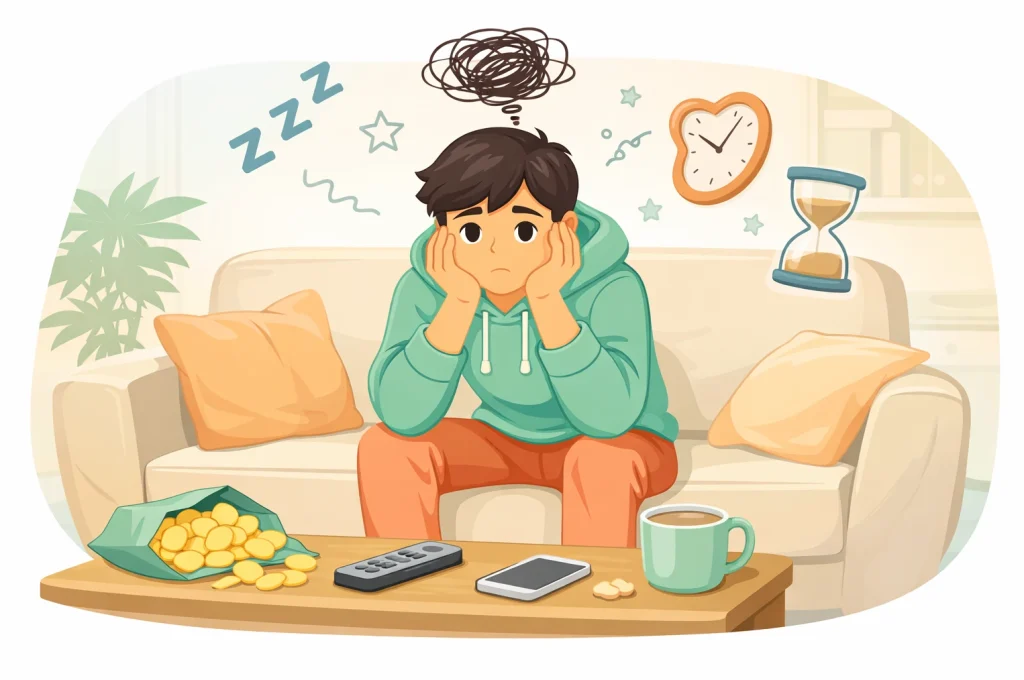
Table of contents:
Loneliness Is Not About Empty Rooms
It can live inside a busy life
People often imagine loneliness as one person sitting alone on a sofa on a Friday night, lit by the glow of a takeaway app. Sure, that happens. But a lot of loneliness looks much more ordinary. It lives in packed calendars, family group chats, open-plan offices, shared apartments, long relationships, whole social circles. You can be surrounded and still feel oddly unheld.
That is because loneliness is not a headcount problem. It is a connection problem. The deeper issue is not "Are there humans nearby?" but "Do I feel seen, safe, wanted, understood - or at least honestly known?" If the answer keeps being no, the nervous system notices. Very much so.
The core feeling is disconnection, not silence
At the center of loneliness is a gap between contact and closeness. You might talk to people all day and still feel like you are performing a version of yourself rather than arriving as yourself. You say the polite thing, the competent thing, the funny-enough thing, and then go home with the strange ache of having been present but not really reached.
That gap matters. Humans regulate through connection. When we feel emotionally outside the circle, even if nobody has explicitly pushed us out, the mind often reads it as danger. Not tiger danger, relax. More like "I may be on my own here" danger. And that changes how people behave. When that happens, critical thinking as the habit of not handing your brain over too easily can help you question the instant story your mind is telling, so a delayed reply or flat moment does not automatically turn into proof that you do not matter.
It shows up in small, sneaky behaviors
Loneliness rarely announces itself with a trumpet. More often it slips into habits. You reread texts and hear rejection where there may be none. You wait for other people to initiate because reaching out feels exposing. Or you do the opposite and over-message, over-explain, over-offer, just to keep some thread alive. Some people become extra agreeable. Others go quiet and call it independence.
You may also notice a kind of social stiffness. Conversations feel effortful. Small talk becomes oddly exhausting. Being around people does not refresh you because part of your mind is scanning the room for proof that you do not quite belong. That is a tiring way to exist, honestly.
The lonely mind starts protecting itself
One of the roughest things about loneliness is that it often creates the very behaviors that keep it going. When connection feels uncertain, people get cautious. They reveal less. They ask for less. They expect less. Sometimes they become pricklier too, because even neutral interactions start carrying too much emotional weight. If that pattern mixes with old shame, it can start looking a lot like low self-esteem quietly choosing for you. This is also where what low trustfulness tends to do behind your back becomes relevant, because once you start expecting disappointment by default, even decent people can feel harder to let in.
So no, loneliness is not just "needing more friends." It is a state of disconnection that changes perception, behavior, and mood. Which is exactly why it deserves more respect than the usual "just get out more" advice. Life is rarely that tidy.
What Comes Back When Loneliness Starts Loosening
Your energy stops leaking into social guesswork
When loneliness eases, one of the first changes is not cinematic. It is quieter than that. You stop spending so much energy decoding every pause, every delayed reply, every slightly flat interaction. The mind has fewer reasons to ask, "Was that weird?" or "Did I say too much?" or "Do they actually want me there?" That alone can feel like someone cracked a window in a stuffy room.
More mental space means more actual life. Work feels less foggy. Evenings stop carrying that same heavy, unplaced ache. You are still human, still occasionally awkward, still capable of sending a text and then staring at it like it owes you clarity. But the whole system becomes less strained.
Relationships get warmer and less performative
People who feel less lonely usually become easier to know. Not because they suddenly turn into extroverts in a bright sweater, but because they do not need to protect themselves quite so hard. They can answer a little more honestly. They can stay in the moment instead of managing their image inside it. That changes the feel of a conversation fast.
And interestingly, it often improves existing relationships more than it creates flashy new ones. You listen better. You ask better questions. You stop treating every interaction like a test of your worth. Connection gets less theatrical, more real. Which is usually where the good stuff lives anyway.
Your standards in closeness rise in a healthy way
Loneliness can make people accept crumbs - attention that is inconsistent, friendships built only on convenience, dating situations that are mostly confusion with a cute playlist. When the fear of disconnection eases, you stop grabbing whatever looks like contact. You become more able to choose people, not just chase them.
That matters for self-respect. You no longer need every invitation to mean salvation. You can tell the difference between being included and being valued. If you have ever noticed that loneliness makes you settle for less than you really want, this shift feels big. A bit sobering too, but big.
Growth gets easier when you feel held somewhere
It is much easier to work on courage, confidence, discipline, or change when you are not emotionally starving. Connection acts like psychological insulation. It does not remove difficulty, but it makes difficulty more bearable. A person who feels supported usually bounces back faster, risks a bit more honestly, and collapses less dramatically after a rough week.
This is one reason loneliness matters in personal growth. It is not a side issue. It shapes the ground everything else is standing on. When belonging grows, even a little, you often become more resilient, more open, and less brittle in your own mind. And that is no small upgrade. If social tension makes you brace in every interaction, it may help to notice how touchiness can intensify social pain too. These things like to travel in packs.
When Loneliness Starts Running the Show
You begin reading ordinary moments as rejection
When loneliness gets strong, the mind starts filling gaps with pessimistic stories. A friend is busy, so obviously they are drifting away. Somebody seems distracted, so clearly you bored them. A group dinner happens without you once, and now your brain is writing a three-act drama about being fundamentally forgettable. Charming little habit, that.
This does not mean you are irrational. It means your system is hungry for reassurance and short on evidence that you matter to people. In that state, neutral events can feel personal very fast. The result is more hurt, more hesitation, more distance. Then the cycle feeds itself. If that sounds familiar, it is worth understanding when this skill is weak life gets expensive fast, because poor emotional regulation can make small social disappointments hit like major proof that something is wrong, and that makes loneliness even harder to loosen.
You either hide more or chase harder
People often respond to loneliness in two opposite-looking ways. One is withdrawal: keeping to yourself, acting "fine," declining plans, telling yourself you do not need much from anyone anyway. The other is pursuit: checking who has replied, trying to stay useful, saying yes too quickly, getting attached to thin threads because thin threads still feel like something.
Both responses make sense. Both can backfire. Hiding keeps you unseen. Chasing can leave you feeling even more exposed and dependent on crumbs. Either way, loneliness starts choosing your behavior before you consciously do. In many cases, that is exactly how this pattern sneaks into ordinary life: you protect yourself from possible rejection so hard that you accidentally make real closeness less likely, and the loneliness you were trying to escape gets another chance to stay in charge.
Cheap substitutes start looking like nourishment
Another sign is that imitation connection begins to eat up real connection. Endless scrolling. Parasocial comfort. Half-attentive texting with five people at once. Staying busy enough that you never have to feel the ache clearly. None of these are evil, by the way. They are just poor replacements for being genuinely known.
The trouble is, substitutes can numb the signal without answering the need. You get a tiny hit of contact, then the emptiness returns - sometimes sharper. If your mood has gone from lonely into persistently flat, heavy, or hopeless, it is worth comparing that pattern with depression in real life, because overlap exists and the distinction matters.
Your body and self-trust feel it too
Long stretches of loneliness often show up as irritability, poor sleep, low motivation, weird emotional hunger, or that brittle feeling where one small social disappointment ruins far more of your day than it should. Concentration can get patchy. So can appetite. Some people feel numb. Others feel needy and then hate themselves for it. Rough combo.
And then there is the quiet hit to identity. Repeated loneliness can make you start narrating yourself as "the one who is outside," "the extra," "the one people like but do not really choose." Once that story settles in, it affects everything from dating to friendship to work. Not because it is objectively true, but because lonely stories are sticky. They cling.
Ways to Loosen Loneliness in Real Life
Choose repeated contact over dramatic chemistry
A lot of adults secretly wait for instant click, instant belonging, instant best-friend energy. Nice idea. Not how most real connection grows. Loneliness softens faster when you place yourself in spaces with recurring contact: the same class, the same volunteer shift, the same walking group, the same Thursday coffee after worship, the same neighborhood thing you nearly talked yourself out of attending.
Familiarity lowers social threat. People become easier to read. You become easier to remember. Belonging often starts boringly, not magically. That is good news, actually.
Practice one notch more honesty
You do not need to spill your life story in the cereal aisle. But if every answer you give is polished, distant, and "all good," people never get a real handle on you. Try being one notch more true in ordinary moments. Not a flood. A notch. "It's been a lonely week, honestly." "I've been a bit off." "I'm still settling in here." Small truthful sentences create openings. If that feels awkward or risky, it helps to learn the best way to be honest in a way that is clear, human, and not emotionally overwhelming, because openness works better when it invites connection instead of pressure.
This matters because connection needs something real to attach to. If you always send out the edited version, people can only connect with the edit. And then you end up feeling unseen again. Annoying, yes. Fixable, also yes.
Keep a living map of your people
When someone feels lonely, the social world often turns into a blur of "nobody" and "everyone else." That is rarely accurate. Make a simple private map with three circles: people who already feel safe, people you like but barely know, and people you have drifted from but still value. Then each week, move one relationship by half an inch. Not a mile. Half an inch.
That might mean sending a voice note, suggesting a walk, replying with actual warmth instead of a heart emoji and disappearance, or asking a follow-up question you would usually leave hanging. Tiny motion beats vague wishing. And if you want those connections to deepen, remember what changes when your word starts carrying weight: reliability makes people feel safer with you, and safety is often what turns casual contact into real trust over time.
Become easier to join
Some lonely people wait to be chosen in exactly the right way. Understandable. Also a trap. Try making your social life a bit more joinable. Invite one person into something already happening instead of inventing a perfect plan from scratch. "I'm grabbing coffee after this, want to come?" works better than the grand, doomed fantasy of organizing a flawless dinner for eight people and then resenting humanity.
This is especially useful if your confidence gets wobbly around invitation. Keep it light, concrete, low-pressure. You are opening a door, not auditioning for approval.
Treat loneliness as a signal, not an identity
Last piece, maybe the most important one. Feeling lonely does not mean you are unlovable, bad at people, behind in life, or destined to become one of those heroic individuals who "need no one" and somehow still cry at dog food commercials. It means a human need is unmet. That is data.
So respond to it with care, not character assassination. Sleep enough. Move your body before social plans if your nervous system tends to freeze. Notice which interactions actually leave you more alive and which leave you more hollow. Then build from there. If this has deep roots - grief, rejection, relocation, shame, old family stuff - a deeper conversation can help. But even then, the work usually begins the same way: one real contact, one real step, one less lonely day than the last.
Should You Focus on This Right Now?
Maybe. Maybe not. Not every season of life calls for working on loneliness first. Some people are mainly dealing with grief, burnout, a new baby, a breakup, money stress, or plain old exhaustion. In those seasons, the ache of disconnection can be real, but it may not be the first knot to untie. Sometimes the emptiness is less about people and more about when life has motion but not meaning, which can make even a full calendar feel strangely hollow.
It helps to ask what is actually driving your current struggle. If your days feel distorted because you keep withdrawing, settling for crumbs, overreading people, or feeling emotionally unfed no matter how "social" life looks, then yes, this is probably worth real attention. If the bigger issue is depression, overload, or shaky boundaries, start there or at least alongside it.
If you want a calmer way to sort that out, AI Coach can help you see which growth area matters most right now and give you a simple three-day starting plan. Sometimes that is far more useful than vaguely promising yourself to "be more social" and hoping the universe fills in the blanks.
Frequently Asked Questions (FAQ)
What is the difference between loneliness and solitude?
Solitude is being alone without feeling cut off. It can be peaceful, nourishing, even glorious if nobody is asking you to join one more group chat. Loneliness is the painful feeling of missing meaningful connection. You can have solitude without loneliness, and you can feel lonely in a crowded house. The difference is not how many people are around. It is whether you feel emotionally connected.
Can you feel lonely in a relationship?
Yes. Very much. Some of the sharpest loneliness happens inside relationships where there is contact but not real attunement. You may talk logistics, share a bed, split bills, post photos, all that - and still feel unseen, unheard, or emotionally alone. That kind of loneliness is often extra confusing because from the outside your life looks "covered." Inside, though, the connection gap is still there.
Is loneliness actually bad for your health, or is that overstated?
It is not just a self-help slogan. Chronic loneliness is associated with worse health outcomes, including higher stress and poorer well-being over time. A broad review of social relationships and mortality found strong social connection matters for health in a serious way. The U.S. Surgeon General's advisory on social connection also summarizes the health risks clearly.
How do I know if what I feel is loneliness or depression?
Look at the pattern. Loneliness usually centers on missing connection and often softens, at least somewhat, after real closeness. Depression is broader. It can include low mood, emptiness, loss of interest, hopelessness, fatigue, sleep or appetite changes, and feeling heavy even when company is available. They can overlap, which is inconvenient but common. If your mood stays flat or dark regardless of connection, depression may be part of the picture.
Why does social media sometimes make loneliness worse instead of better?
Because it can give you exposure without closeness. You see people, but you are not with them. You get snippets, performances, updates, comparisons, not necessarily the experience of being known. For lonely people, that often turns into a weird mix of stimulation and deprivation. You feel plugged in and left out at the same time. A lovely modern trick, really. Used lightly it can help. Used as a substitute for real contact, not so much.
What helps more: meeting lots of people or getting closer to a few?
Usually the second one. A wider circle can help you find your people, sure, but loneliness is often relieved more by depth than by volume. One or two warmer, more honest relationships tend to change the inner climate more than ten pleasant-but-thin interactions. That is why repeated contact and slightly more truthful conversation matter so much. They create actual closeness, not just activity.
Why is making friends as an adult so awkward?
Because adult life is badly designed for accidental closeness. People are busy, tired, partnered, parenting, commuting, moving cities, half glued to their phones, and often embarrassed to admit they want more friendship. Also, school used to do a lot of social heavy lifting for free. Adulthood does not. So yes, it can feel awkward. That does not mean you are failing. It means friendship now needs a little more intention and repetition.
Should I force myself to socialize when I feel lonely?
Not blindly. Pushing yourself into loud, draining, low-fit situations can make loneliness worse, because you come home even more convinced that "being around people doesn't help." Better approach: choose lower-pressure contact with a decent chance of warmth. One walk, one class, one coffee, one recurring place. Aim for connection, not sheer exposure. You do not need maximum people. You need better contact.
Can loneliness make someone clingy or, weirdly, overly independent?
Yes to both. Some people respond by reaching too hard, attaching fast, tolerating poor treatment, or needing constant reassurance. Others swing the other way and become emotionally self-sealing: "I don't need anyone," "I'm better on my own," and so on. Often those are two versions of the same wound wearing different outfits. Loneliness does not always look needy. Sometimes it looks armored.
What is one small thing I can do today if I feel lonely right now?
Do one concrete act that contains actual contact. Not vague scrolling, not "maybe later." Send a message with a real sentence in it. Invite someone into a simple plan already on your calendar. Return to a place where people are starting to recognize you. Or answer the next "How are you?" one notch more honestly than usual. Small, specific, real - that is the direction. Loneliness rarely breaks all at once. It loosens through contact that is genuine enough to register.