
There is a special kind of tiredness that comes from saying "I'm fine" when you are not, "I sent it" when you did not, or "No worries" while your jaw is basically filing a complaint. A weak honesty habit rarely looks dramatic. It looks tidy, polite, functional and weirdly exhausting.
Honesty is the skill of staying in contact with what is true, then saying enough of that truth that real life can actually work. If conversations keep getting slippery, trust feels thin, or you leave interactions thinking, "Well, that was not really me," this may be the spot to work on.
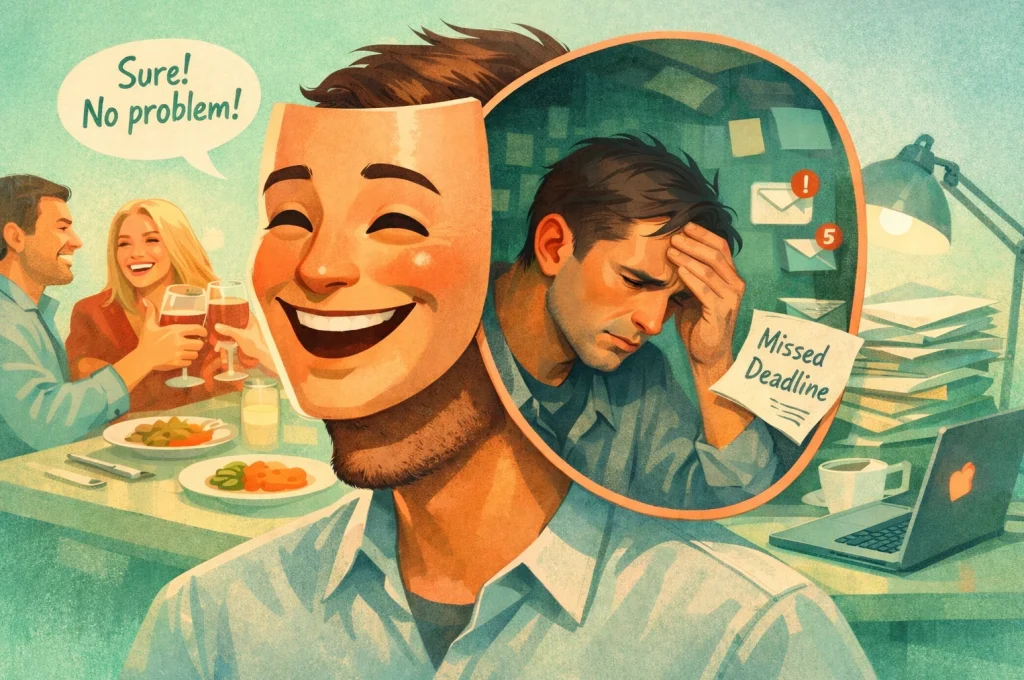
Table of contents:
Where Honesty Starts Paying You Back
You waste less energy pretending
Honest people waste less energy managing the gap between what they think, what they feel, and what they say. That gap is expensive. You say "Sounds good" in the meeting, then spend the afternoon muttering at your laptop because it did not sound good at all. Or you tell a friend, "Any restaurant works," then get quietly irritated when they choose the place you never wanted. Honesty closes that silly split. It also leaves less room for decision fatigue to chew through your day, because fewer inner negotiations are happening in the background. Not by making you blunt at all times, relax, but by helping your words match reality more often. The result is less mental clutter, less second guessing, and fewer moments of "Why am I so tense?" when the answer is, frankly, because you were acting.
People stop having to read your weather
When your honesty gets steadier, other people stop guessing. They know whether you are actually available, whether you really agree, whether your "yes" means yes or means "I feel guilty and will disappear later." That clarity is gold at work and at home. In practical terms, it strengthens organizational skills, because clear answers make planning, deadlines, and shared expectations far easier to manage. A manager can plan around you. A partner does not have to decode your face like weather. Even ordinary errands get easier. "I can do Saturday, not Friday." "I do not understand this part." "I am interested, but not at that price." Simple sentences, huge relief. People trust honesty because it reduces hidden clauses. Nobody enjoys signing an emotional contract with invisible fine print.
Tense situations get shorter
Honesty also makes friction shorter. If something is off and you can name it early, the thing stays small. You do not need three weird weeks of frosty politeness because you can say, "I felt brushed off in that call," or "I cannot finish this by noon, and I should have said that sooner." Notice what this does: it gives reality a chair at the table before drama drags in its luggage. Honest people are not conflict hungry. Usually the opposite. They just understand that a clean awkward moment is often cheaper than a long fake one. Very adult. Slightly annoying. Extremely useful.
Your self respect gets steadier
There is another payoff people do not talk about enough: self respect gets less wobbly. When you tell the truth, even imperfectly, you stop abandoning yourself in tiny installments. You can dislike the conversation and still feel solid afterward. That matters. A person who is honest can apologize without twisting into a pretzel, ask for what they want without sneaky maneuvers, and admit mixed motives without collapsing. "Part of me wants the promotion because I care about the work, and part of me wants the status too." Fair enough. Honest enough. That kind of inner steadiness is quiet, but it changes the whole texture of a life. And yes, you often sleep better too, because you are not replaying quite so many edited scenes in your head.
What Life Gets Like When Honesty Stays Thin
You become hard to read
When honesty is weak, you start performing little versions of yourself for different rooms. Easygoing here. More competent there. Less hurt than you really are. More interested than you really are. At first it looks like social skill. Then it gets muddy. You leave one conversation sounding enthusiastic, another sounding detached, a third sounding mysterious when you were actually just scared to be clear. After a while people are not sure who they are meeting, and neither are you. That is the creepy part, honestly. Not hypocrisy in a movie villain way. More like identity by improvisation, all day, every day.
Tiny lies create admin you did not need
Dishonesty is not only a moral issue. It is a paperwork issue. One small lie tends to need backup. You said you were late because traffic was awful, so now you have to remember the fake accident, the imaginary route, the reason you could not text sooner. You told a client the draft was "almost done," though you had barely opened the file, so now your evening becomes a panicked sprint with extra shame sprinkled on top. The lie might save thirty seconds. Then it sends you an invoice. Time, stress, more lying, less freedom. Very bad trade.
Resentment leaks out sideways
People who avoid honesty often think they are being nice. Sometimes they are really avoiding discomfort. Instead of saying "I do not want to come," they say "Let me see." Instead of "I am upset," they go cold and say "Nothing's wrong." Instead of "I want credit for my work," they drop hints and hope the room develops telepathy. It never does. So truth comes out sideways. Sarcasm. Withdrawing. Overexplaining. A cheerful tone with sharp little edges. You have seen this, yeah? Maybe in someone else. Maybe, awkwardly, in your own texts. When honesty stays blocked, resentment tends to find a side door.
Trust erodes in grains, not chunks
Trust usually does not explode in one grand scene. It thins out slowly. Someone notices that your stories change depending on the audience. They notice you promise warmly and deliver fuzzily. They notice your compliments are generous but strangely slippery, like you are offering approval and editing yourself at the same time. Once people start double checking your words, life gets harder. Work requires more follow up. Relationships require more reassurance. In a team, this is also how weak leadership starts showing up, because people spend more time decoding intent than moving the work forward. And inside, you begin doubting your own voice. If you keep bending truth to manage reactions, you stop getting clean feedback from life. Then growth stalls, because you cannot improve a pattern you keep disguising.
What is The Best Way to Be Honest
Begin with truths that fit inside ordinary life
Start where the stakes are low enough that you will actually practice. Not with a dramatic family summit and seventeen years of buried grievances, please. Start with ordinary moments. "I am not up for a call tonight." "I do not know the answer yet." "That joke landed badly for me." Small honest sentences teach your nervous system that truth is survivable. This matters because most dishonesty is not strategic evil. It is anxiety management. The body wants safety, approval, less friction. So train honesty in places where a wobble will not wreck your week. Repetition beats heroics here.
Say the true thing in a usable form
A lot of people think honesty means saying every raw thought exactly as it appears. That is not honesty. That is impulse with a microphone. A better target is clean truth. Try sentences that pair truth with responsibility: "I do not like how this was handled, and I want to help fix it." "I was wrong." "I said yes too fast." "I want this because feedback matters to me." Notice the pattern? This is where honesty starts working with motivational skills: the truth lands as useful direction instead of heat, pressure, or performance. No tricks. No smoke. No decorative blame frosting. Just the true thing, said in a form another human can actually use.
Choose the plain version when excuses are easier
If lying would be easier, pause five seconds and choose the plain version on purpose. "I missed the deadline." "I forgot." "I did not prepare enough." This is one of the fastest ways to grow honesty, because it cuts the habit at the exact moment it usually sneaks in. Awkward, yes. Often very awkward. But strangely clean. And when you need to tell someone a harder truth, get to your real motive sooner. Not "Whatever you think is fine." Try "I am pushing for this because I want more visibility on the project." Direct beats manipulative every day of the week.
Catch the moment you start polishing reality
Pay attention to when you start decorating. Some people exaggerate when they want admiration. Some go vague when they fear rejection. Some sugarcoat because anger in other people feels unbearable. Catch the moment. Not later in a journal written like a courtroom transcript, but in the body first: a little rush, a tightening chest, an urge to sound better, kinder, smarter, less responsible. That is your cue. Ask, "What am I trying to avoid right now?" Usually the answer is not "truth." It is embarrassment, conflict, or loss of control. Very human. Also very workable.
Track honest moments, not perfect ones
At the end of the day, write down one moment when you told the truth a little more cleanly than usual. Then add what it cost and what it gave. Maybe the cost was ten seconds of discomfort. Maybe the gain was relief, clearer trust, or simply not having to remember nonsense later. You can also note three places where you were sincere, even in small ways: admitting reluctance, naming a real feeling, dropping an exaggeration. Progress in honesty is not measured by becoming brutally candid. It is measured by shorter delays, fewer masks, cleaner repair after mistakes, and a growing ability to say what is so without performing around it.
Should Honesty Be the Skill You Work on Next?
Not necessarily. Some people do need more honesty. Others already tell the truth fairly well and actually need better timing, stronger boundaries, or a safer environment to speak in. In those cases, building assertiveness makes daily life less messy, because it helps you say what is true clearly and without turning every honest moment into a fight. If your main problem is fear, people pleasing, or living around volatile people, honesty may matter, but it may not be the first lever to pull. Different season, different skill. For example, if your attention is constantly pulled away by notifications, phone addiction and digital overload may be the more urgent issue first, because scattered attention makes self-awareness and clean communication much harder.
It helps to look at the real pattern. Do you keep smoothing, exaggerating, hiding motives, or giving answers that sound nice but create mess later? Then honesty is probably worth direct practice. If you mostly struggle with shame, conflict panic, or saying yes to stay safe, work on those alongside honesty or you will keep asking a scared nervous system to behave like a philosopher. If that habit of saying yes just to stay safe feels uncomfortably familiar, it can help to look at when codependency runs the show, because honesty becomes much harder when your sense of stability depends on keeping everyone else comfortable.
If you want a clearer read on what to focus on next, AI Coach can help you sort the priority and give you a simple plan for the first three days. Sometimes that is more useful than making another private vow to "just be more real" and then, well, going right back to polite camouflage by Tuesday.
Frequently Asked Questions (FAQ)
Is honesty the same as saying everything I think?
No. That is not honesty. That is overflow. Honesty means staying aligned with reality and speaking truth in a way that is accurate and responsible. You do not need to announce every passing irritation, every private judgment, or every half formed opinion. The useful question is simpler: am I saying what is true enough for this situation, or am I hiding, performing, or manipulating?
How can I be honest without sounding rude?
Use plain words and own your part. "I do not agree with this approach." "I am not available tonight." "That comment bothered me." "I should have said this sooner." Those sentences are honest without becoming a personality flamethrower. Rudeness usually comes from contempt, pent up resentment, or the urge to win. Honesty is cleaner than that. It tells the truth without trying to bruise the other person on the way out.
Why do I lie about small things that barely matter?
Usually because the lie is not about the facts. It is about protection. You want to look competent, avoid disapproval, skip embarrassment, keep the peace, sound more interesting, seem less needy. Tiny lies are often little patches over vulnerable spots. That is why paying attention to your trigger matters. If you know whether you lie to avoid shame, rejection, or conflict, the habit stops feeling mysterious and starts becoming trainable.
What should I say when I need to admit I messed up?
Keep it short and factual first. "I missed it." "I gave you the wrong information." "I was late, and I should have told you earlier." Then, if needed, add the repair step: "I am fixing it now," or "Here is what I can do next." Most people get tangled because they try to defend character before they state reality. Say the plain version first. It is usually the strongest move in the room.
Can honesty hurt a relationship?
Clumsy honesty can, sure. So can delayed honesty, selective honesty, or honesty delivered like a revenge hobby. But clean honesty usually protects relationships more than it harms them. It helps people know where they stand. It reduces guessing. It prevents resentment from sneaking out through sarcasm, distance, or "nothing's wrong" theater. The goal is not maximum disclosure. It is enough truth for trust to stay real.
Is it ever okay to stay silent instead of being honest?
Yes. Privacy is not dishonesty. Timing matters. Safety matters. You do not owe everyone full access to your interior world. But silence becomes dishonest when it is used to create a false impression you plan to benefit from. If you stay quiet because you need time, say that. "I do not want to answer yet." "I need a day to think." That is honest silence. Different animal.
What if I grew up around people who punished honesty?
Then your caution makes sense. A nervous system learns fast. If truth once brought ridicule, rage, withdrawal, or chaos, of course honesty can feel dangerous even now. Start small. Low stakes truths. Safe people. Short sentences. You are not trying to become fearless overnight. You are teaching yourself that present day honesty is not the same as past danger. Slow work, but very real work.
How do I stop exaggerating when I tell stories?
Slow the story down and swap intensity words for facts. Instead of "everyone loved it," say "three people said yes." Instead of "it was a total disaster," say "we missed the deadline and had to redo one section." Exaggeration often shows up when you want impact, sympathy, or admiration. Fair enough. Human thing. But facts are steadier. They also make you more believable, which helps far more in the long run.
How can I tell if I am actually getting better at honesty?
Look for behavioral signs, not identity labels. You admit mistakes faster. You use fewer excuses. You ask more directly for what you want. You leave fewer conversations feeling fake. You exaggerate less. You recover more quickly after awkward truths instead of spiraling for six hours because someone looked mildly surprised. Progress is usually quiet. Less editing. Less fog. More clean contact.
Is honesty always the best policy at work?
Honesty at work matters a lot, but it needs judgment. You do not need to dump every emotion into a team call like confetti. You do need to be truthful about deadlines, errors, capacity, concerns, and motives that affect the work. "I cannot deliver this by Friday." "I do not understand the brief." "I made the wrong assumption." That kind of honesty makes you easier to trust. Raw blurting does not. Useful truth does.