
There is a grim little moment when life knocks, again, and your mind answers before you do: "Yeah, yeah, this won't change anything." Not dramatic. Not cinematic. Just flat. You stop arguing with the stuckness and start arranging your life around it, like a chair nobody likes but everyone keeps walking around.
That is often what learned helplessness feels like in real life. Not weakness. Not a lack of brains. More like a system that has seen enough dead ends that it starts treating effort itself as a bad investment. If that lands a bit too hard, stay with me. This pattern can loosen.
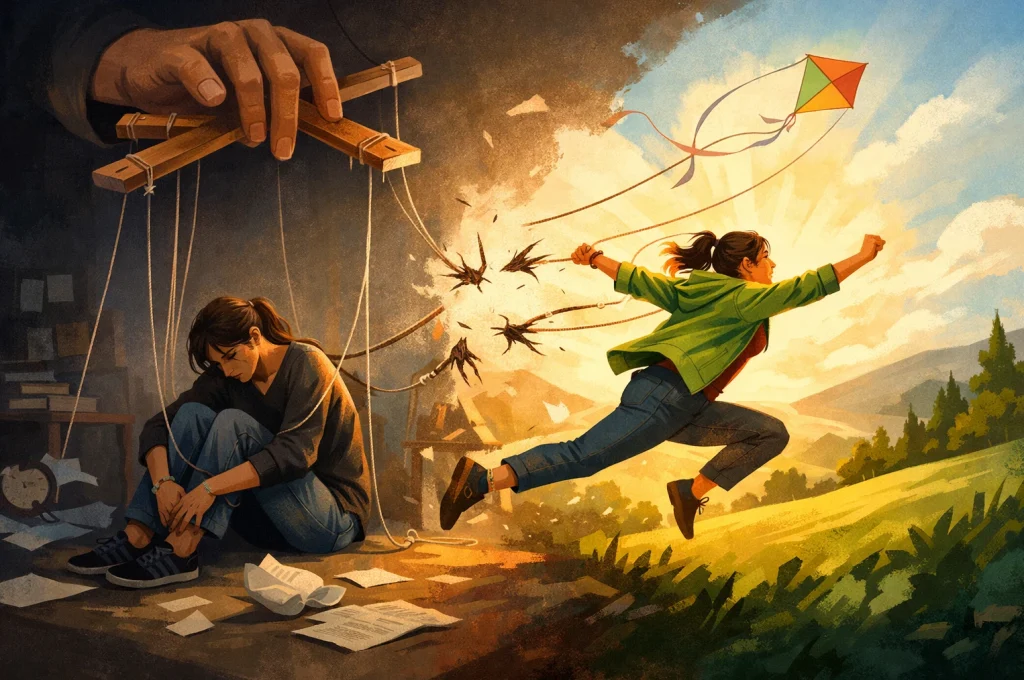
Table of contents:
What starts coming back when helplessness loses its grip
You stop quitting in your head before anything has actually happened
One of the strangest things about learned helplessness is that it makes defeat feel preloaded. The email has not been sent, the conversation has not happened, the application is not even finished, and yet some part of you has already declared the result: pointless. When that pattern weakens, you get a very ordinary but powerful freedom back. You try first. Then you judge. Not the other way around. This is also where discipline stops depending on your mood, because action no longer has to wait for a perfect emotional weather report before it begins.
That changes more than people expect. You ask the landlord to fix the heater instead of assuming it will be ignored. You apply for the role even though the last five went nowhere. You bring up the issue with your partner before writing the whole relationship off in your head. Tiny things, maybe. But tiny things are where a life turns.
Setbacks shrink back to normal size
When learned helplessness is active, one bad outcome tends to spread like spilled coffee. A rejection becomes "nothing ever works for me." A rough week at work becomes "I'm obviously not cut out for this." The mind stops treating events as events and starts treating them as proof. Deeply rude habit, honestly.
As the pattern softens, disappointment still stings. Of course it does. But it stops becoming a global verdict. You can have a failed attempt without converting it into a personality description. That matters because recovery gets faster. You spend less time sprawled on the floor, metaphorically or otherwise, wondering why you even bother existing near goals.
Your sense of control gets more realistic, not magically cheerful
Getting out of helplessness does not mean becoming one of those aggressively upbeat people who think every obstacle is a "beautiful opportunity." Relax. It usually looks more grounded than that. You stop demanding total control and start noticing partial influence.
That is a huge shift. Most adult problems are not fully controllable. Health stuff, office politics, family dynamics, money stress, other people being weird on purpose or by accident - welcome to Earth. But partial influence is still influence. You can ask a better question, leave one room earlier, send one follow-up, save one small amount, book one appointment, say one honest sentence. A calmer mind starts seeing these openings again.
Self-trust grows from evidence instead of pep talks
A lot of people try to fix helplessness by shouting motivational slogans at themselves internally. Mixed results there. What actually helps is evidence. "I can affect some things" starts to feel believable when you keep seeing your actions create movement, even modest movement.
That kind of self-trust is quieter than confidence theater. It is less "I can do anything" and more "I'm not as powerless as I feel when I'm flooded." Much better sentence. More adult. More useful on a Wednesday when your inbox is feral and your brain wants to disappear into toast and denial.
How learned helplessness sneaks into ordinary life
You hear "why bother" in situations that are not actually hopeless
This is one of the clearest signs. The mind reaches for resignation faster than the facts justify. You put off looking at your bank account because it feels pointless anyway. You do not ask for help because "they won't care." You stay in the bad setup, the bad routine, the bad conversation, because your system is already emotionally packed for failure.
And the tricky part is that this can sound sensible. Especially if life has given you real reasons to feel worn down. Repeated criticism. Chaotic parenting. A boss who ignores every idea until someone louder repeats it. Chronic health issues. Bureaucracy with the charm of damp cardboard. The pattern usually grows where effort and outcome kept getting disconnected.
Your world quietly gets smaller
Learned helplessness rarely arrives with a brass band. It shrinks life by inches. You stop pitching ideas. You stop trying new routines. You stop correcting people when they get things wrong about you. You choose the restaurant, the job, the relationship dynamic, the family role that asks the least from your sense of agency. Safer, sure. Also smaller.
After a while this starts looking like personality. "I'm just not proactive." "I'm just bad at change." Maybe. But sometimes what looks like temperament is really training. The system learned that stretching out toward life often led to a slap, a shrug, or a wall. So now it stays tucked in.
You wait for rescue, clarity, or the perfect mood
Another tell: you keep feeling that you could act if only the right conditions arrived first. If someone else made the call. If motivation showed up. If the anxiety left. If you suddenly became a different, shinier person who alphabetizes spices and never doom-scrolls in bed. Lovely fantasy. Not required. And if that delay keeps getting padded out by scrolling, notifications, and digital noise, it is worth noticing what too much digital input quietly does to a person, because overstimulation can make avoidance feel strangely productive while your real decisions keep waiting in the hall.
Helplessness often survives because action gets postponed until emotional certainty appears. But certainty is a diva. It rarely comes on time. So the pattern keeps feeding itself: no action, no new evidence, same old story. Round and round. Very efficient if your goal is to stay stuck forever.
Good outcomes do not update the old story very well
This part is sneaky. Even when something does go right, people in helplessness often explain it away. "That was luck." "It was easy, so it does not count." "Anyone could have done that." The brain protects the old worldview like a grumpy museum guard. Sometimes this blends neatly with when perfectionism gets too loud and life starts shrinking, because if only flawless effort counts, normal progress never gets enough credit to revise the story.
So success lands weakly, but failure lands like scripture. That imbalance is a big reason the pattern lasts, even in capable people. Intelligence does not automatically fix it. Ambition does not fix it. Sometimes the more capable the person is, the more privately maddening the pattern feels, because they can see the gap between what they know and what they keep expecting.
Ways to loosen learned helplessness without turning yourself into your own drill sergeant
Catch the sentence that shuts the door too early
Helplessness usually speaks in short, dead-end lines: "It won't matter." "They never listen." "I'll mess it up anyway." "That's just how it is." For a week, notice those sentences in real time, or as close to real time as you can manage. Not to argue with them yet. Just to catch them in the act. That moment of noticing is small, but it matters, because it creates just enough room for curiosity to wake back up in ordinary life and ask whether the situation is actually closed or whether your mind closed it early.
Then do one small edit. Turn the prophecy into a test. "It won't matter" becomes "I don't know yet what effect this will have." "They never listen" becomes "Some people have not listened before." It sounds tiny. It is tiny. Tiny is fine. Helplessness feeds on certainty; testing interrupts it.
Work where your action can be seen by your own nervous system
If your life feels overwhelmingly stuck, do not start with the biggest wound in the building. Start where cause and effect are visible. Send the one email. Rebook the missed appointment. Put the return by the door. Spend ten minutes on the form instead of fantasizing about becoming "someone who handles paperwork." The point is not productivity. The point is relearning impact.
Helpless systems need proof more than inspiration. They need to see, over and over, that action can lead to movement. Not always to triumph. Movement is enough for now. If you need a gentler structure for that process, the lazy way to build self-discipline fits surprisingly well here, because when effort stops feeling like punishment, it becomes much easier to act before your doubts start narrating the ending.
Use "influence goals" instead of outcome obsessions
Outcome goals are seductive and sometimes useful, but they can be rough on a helpless mind. "Get the job." "Fix the relationship." "Stop being anxious." That is a lot of pressure for a nervous system already expecting failure. Try influence goals instead. "Send three applications." "Ask one direct question." "Take a walk before the hard conversation." "Bring my notes into the meeting. And if those influence goals keep breaking down at the point where you have to say the thing out loud, practice helps: ways to become easier to understand and easier to hear can make action feel less like a leap and more like a clear next step."
These goals are humbler. Also better. They keep attention on what your hand can actually touch. Oddly enough, this often improves outcomes too, because you stop burning all your energy trying to control what was never fully yours.
Borrow structure, not substitution
Support helps. A lot. But there is a difference between support that grows your agency and support that quietly replaces it. Good support sounds like: "Want me to sit with you while you make the call?" "Send me the draft by five and I'll look at it." "Let's plan your first move, not your whole life." That kind of help lends steadiness without stealing the steering wheel.
And pay attention to early signs of improvement. You hesitate less before starting. You recover faster after a no. You notice options sooner. You complain a bit less in your head and experiment a bit more in real life. Not glamorous, no. But that is how helplessness usually loosens: not with a motivational thunderclap, more with repeated proof that you are not locked out of your own life after all.
Should this be the knot you work on now?
Not always. Some people really are dealing with learned helplessness. Others are mainly dealing with burnout, grief, depression, an abusive environment, untreated ADHD, money panic, or plain old exhaustion. If your life keeps punishing effort hard enough, the first job may be safety or stabilization, not immediately trying to become wildly agentic by Friday.
What helps is looking at the pattern honestly. Do you keep assuming your actions will not matter, even in places where they probably would? Do you stop before you start, explain away wins, or stay passive in problems that do have at least a crack of room in them? Then yes, this deserves attention. If the bigger issue is that your environment is truly crushing, start there too, or your efforts will scatter.
If you want a cleaner read on what needs priority first, AI Coach can help you sort it out and give you a simple plan for the first three days. Sometimes that is more useful than making one heroic promise to "change everything" and then feeling defeated by lunch.
Frequently Asked Questions (FAQ)
What is learned helplessness in simple terms?
It is a pattern where a person starts expecting that their actions will not make much difference, usually after repeated experiences of low control, failure, punishment, or unpredictability. Over time, they stop trying as much, even in situations where change is actually possible. The trap is not only external. It becomes a mental habit.
How is learned helplessness different from laziness?
Laziness is a sloppy label and usually not very useful. Learned helplessness is less about not caring and more about expecting effort to go nowhere. A person may want things deeply and still feel flat, avoidant, or passive because their system has learned that trying leads to disappointment, humiliation, or nothing at all. From the outside that can look lazy. From the inside it often feels more like defeat arriving early.
What usually causes learned helplessness?
Common ingredients include repeated failure, harsh criticism, chaotic or controlling parenting, bullying, neglect, abusive relationships, workplaces where effort is ignored, chronic illness, discrimination, and situations where rules keep changing. The core issue is repeated lack of control or the feeling that outcomes are disconnected from what you do. The brain starts generalizing: "Why try here either?"
Can learned helplessness come from childhood?
Yes, very often. A child who is constantly overruled, shamed, ignored, or punished unpredictably can learn that their choices do not matter much. Overprotective environments can contribute too, especially if a child rarely gets to struggle, try, fail, and recover on their own. Later, as an adult, that old learning may show up as passivity, giving up quickly, or waiting for other people to run life.
Is learned helplessness related to depression?
They overlap a lot, but they are not identical. Learned helplessness can feed depression because hopelessness and passivity drain energy and reduce the sense of agency that protects mood. Depression can also make helplessness stronger because everything feels heavier and less possible. If low mood, sleep changes, emptiness, or loss of pleasure are strong and persistent, there may be more going on than this pattern alone.
Can successful or high-achieving people still have learned helplessness?
Absolutely. Some people function very well in areas where they feel competent and still go oddly passive in others: relationships, health, money, conflict, creativity, asking for support, leaving bad jobs. Learned helplessness is often specific before it becomes broader. A person can be brilliant at work and still believe they have no influence in love, family, or their own body. Humans are nothing if not inconsistent.
Why do I freeze even when I know exactly what I should do?
Because knowing and expecting impact are different things. You may understand the logical next step perfectly and still have a nervous system that predicts failure, rejection, or overwhelm. That creates hesitation, fog, or shutdown. In those moments, smaller actions help more than better lectures. The goal is not to prove you are fearless. It is to make action feel possible enough to begin.
How can I help someone with learned helplessness without taking over for them?
Offer structure, not rescue. Help them break the task down, sit with them while they start, remind them of specific past moments where their actions mattered, and keep the first step small and concrete. Try not to do the whole thing for them unless truly necessary. If you remove every difficulty, you may also remove the chance for their brain to relearn agency. Support should steady them, not replace them.
How long does it take to unlearn learned helplessness?
It depends on how deep the pattern runs, what created it, and whether the current environment keeps reinforcing it. Some people notice early changes within weeks once they start testing small actions and collecting evidence of influence. Deeper change usually takes longer because it is not only a mindset shift. It is repeated retraining of expectation, behavior, and nervous-system trust. Slow does not mean fake, though. Slow is often how real change looks.
What is the best first step if everything feels pointless?
Pick one action that is small, visible, and slightly useful. Not life-changing. Just visible. Send the text. Throw away the expired stuff in the fridge. Open the bill. Step outside for five minutes. Book the appointment. Learned helplessness gets weaker when your brain can watch you do something and then watch reality move, even a little. Start there. Then do it again tomorrow, a bit scruffily if needed. That still counts.