
Touchiness is that odd little habit where tiny remarks land like thumbtacks right in the ego. A joke that was probably nothing. A flat message from your boss. Your partner saying, "That's not what I meant" - and boom, the whole emotional weather inside you shifts. Sunny to thunderstorm in about eight seconds.
If you replay small stings for hours, get defensive before you've even figured out what the other person meant, or feel weirdly bruised by ordinary feedback, there's probably something worth looking at here. And honestly, life gets so much lighter when every comment stops feeling like a verdict on who you are.
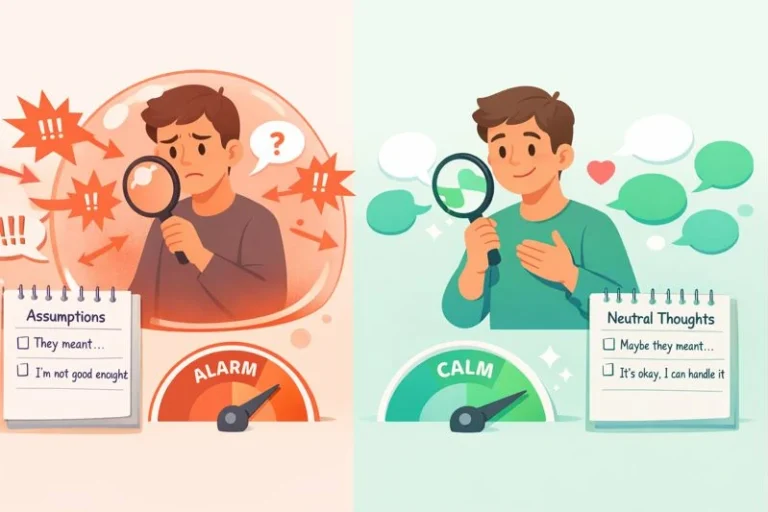
Table of contents:
Touchiness up close: when ordinary remarks hit too hard
It is not the same thing as depth or kindness
Touchiness gets mixed up with sensitivity all the time. But they're not twins. More like distant cousins who don't actually get along. A sensitive person notices nuance, mood, subtext, the little tremor in someone's voice. A touchy person often feels attacked by that nuance. Big difference.
You can be thoughtful, warm, emotionally intelligent - all that good stuff - without treating every clumsy sentence like a personal insult. Touchiness is less about having deep feelings and more about how fast the mind turns discomfort into offense. Someone says, "Could you redo this part?" and your brain, being wildly dramatic, hears, "You are incompetent and should never touch a document again." Someone forgets to text back and suddenly there's a whole inner investigation going on: ignored, dismissed, not important. Charming. Also very common.
Personalization happens at ridiculous speed
One of the clearest signs of touchiness is how quickly neutral things stop feeling neutral. A friend seems distracted at dinner, and somehow you end up feeling rejected. A coworker sends short feedback in Slack, and in your head it reads like ice. A joke misses the mark and instead of thinking, "Well, that was awkward," you feel stabbed by it. Not deeply, maybe, but enough to carry it around like a pebble in your shoe.
Usually this happens because the nervous system is already on the lookout for disrespect, criticism, exclusion, that whole miserable trio. Sometimes the pattern started early - in homes where mistakes got mocked, emotions got brushed aside, or affection felt a bit... conditional. Sometimes it grows later out of stress, low self-esteem, perfectionism, or rejection sensitivity. Either way, the mind starts wearing emotional magnifying glasses that make harmless things look sharp, personal, loaded.
Defense shows up before understanding does
Touchiness rarely stays hidden. It leaks. You explain yourself too fast, argue over tone, withdraw halfway through a conversation, go cold, go sarcastic, start building a defense before anyone has actually accused you of anything. The body usually arrives first: tight chest, hot face, jaw set, that little inner "Oh, really?" popping up like toast.
And here's the sneaky bit: in the moment, it feels justified. Of course it does. If something sounds like an attack, defending yourself seems sensible. But when this becomes your default setting, people stop relaxing around you. They get careful. Filtered. A little edited. Nobody says, "I'd love to talk, but your nervous system keeps showing up with riot gear," yet... that is sometimes the vibe.
The sting lasts longer than the event
Touchiness has a long emotional aftertaste. The comment itself takes five seconds. Your replay of it? Five hours. Sometimes two days, if we're being honest and not pretending to be mysterious woodland sages about it. You think of better comebacks in the shower. You reread messages looking for hidden contempt. You carry the mood into unrelated moments, so now the whole day feels faintly scratched.
That's why touchiness is so draining. It quietly chews through what efficiency is, its core traits, and how it shows up, too, because so much mental fuel gets burned on replaying, decoding, stewing. Not on anything useful. It's not only the original hurt - it's the extra life you give it afterward. A small friction turns into a long private movie, and unfortunately, you're the one stuck watching it. Again.
What starts changing when touchiness loosens its grip
Feedback stops feeling like a character attack
One of the biggest shifts is simple, and kind of glorious: correction becomes usable. Not fun, necessarily. No one wakes up excited to hear, "This needs work." But when touchiness softens, feedback stops punching straight through to identity. You can hear, "This draft is unclear," without translating it into, "I am fundamentally a mess and should probably disappear into the forest."
That matters everywhere real life happens - work, dating, friendship, family, creative projects, even group chats, heaven help us. If you can receive input without instantly armoring up, you learn faster. You improve faster, too. People trust you more. They collaborate with you more easily. A person who doesn't flare up or collapse at every note becomes much easier to teach, rely on, and be honest with. That opens doors. Quietly, but for real.
Relationships get more oxygen
Touchiness can make conversation feel like walking through a room full of glassware in socks. People hesitate. They soften every sentence. They over-explain. Or they stop bringing things up at all, which seems peaceful for a while - until resentment starts renting space in the walls.
When touchiness eases, relationships can breathe again. You can ask, "What did you mean by that?" instead of assuming the worst and building a whole emotional crime scene. You can hear a clumsy phrase and not turn it into a moral emergency. Your partner, friends, or coworkers no longer have to spend half their energy managing your reaction before they even reach the point. That does wonders for closeness. Real closeness, not the fragile kind. Because actual intimacy needs room for imperfection. If nobody is allowed to misspeak, nobody relaxes. And if nobody relaxes, nobody really connects.
Your public life becomes less emotionally expensive
Reducing touchiness changes how you move through the wider world, too. Meetings get easier. Group chats get easier. Sharing half-formed ideas gets easier. You stop taking every short reply, delayed answer, raised eyebrow, dry comment, or lukewarm reaction as proof that something is wrong with you. Which, let's be honest, is a huge relief.
That gives you range. You speak more freely. You recover from awkward moments faster. There's usually more room for spontaneity in real life, because not every unscripted moment feels dangerous anymore. You stop wasting so much bandwidth decoding tone like it's an FBI file. And wow, getting that part of your brain back? Lovely.
Self-respect becomes sturdier, not louder
Here's the deeper win. Your sense of self stops wobbling so much. Touchiness often sits on top of a fragile inner story, one that gets rattled by tiny signs of disapproval. When that fragility settles, confidence becomes quieter and steadier. Less "Everyone must confirm I'm okay." More "I can stay okay even if this moment is imperfect."
That kind of steadiness is gold. It doesn't make you cold, and it doesn't turn you into a brick wall in nice jeans. If anything, it strengthens what integrity really means in everyday life, because you can stay honest and grounded without needing constant reassurance from the room first. Your worth stops dangling from every passing opinion like a coat on a wobbly hook. Much better arrangement.
When touchiness starts running the room
Small comments start feeling weirdly huge
When touchiness gets too comfortable, scale goes funny. Minor remarks arrive with major emotional weight. "Can you speak up?" sounds rude. "I liked your last version better" feels crushing. "You seemed off earlier" lands like a charge in court.
The outside event is small. The inside impact is not. And that mismatch creates friction everywhere. You keep having big reactions to things other people barely register, then comes the lonely part: you feel misunderstood on top of hurt. "Why is nobody seeing how upsetting this was?" Well... sometimes because what hit you like a slap was, in plain reality, just a sloppy sentence and not much more. That's hard to hear, sure. Still true sometimes.
Conversations turn into mini trials
Touchy people often become very skilled investigators of tone. They notice the sigh, the wording, the pause, the look, the text with no exclamation point - and suddenly the conversation is no longer about the actual issue. It's about the offense. What could have been a quick repair turns into a whole courtroom drama over who sounded dismissive at 4:12 p.m.
Exhausting, right? You don't feel heard. The other person doesn't feel trusted. The original topic - poor thing - gets left in a ditch by the roadside. Relationships can survive conflict, misunderstandings, awkward phases, all sorts of mess. But chronic emotional hair-trigger tension wears them down in a deeply unsexy way.
You either overreact or over-edit yourself
People tend to think touchiness always looks explosive. Not really. Sometimes it looks like withdrawal, silence, fake politeness, or that stiff little "I'm fine" which is, obviously, not fine at all. You may stop sharing ideas because criticism stings too much. You may dodge honest conversations because even mild disagreement leaves you rattled. So the outside looks calm enough. Inside? Absolute racket.
That can quietly stunt your growth. If every correction bruises you, you stop exposing yourself to learning. Over time, that can slide toward when the brain learns to say "why bother", where protecting yourself starts looking a lot like giving up before anything can sting. Over time, that can weaken what ambition is and how it shows up in real life, because bigger goals ask something uncomfortable of us: the ability to survive feedback, mistakes, visible effort, imperfect drafts, awkward first tries. If every misunderstanding feels humiliating, you become careful in ways that shrink your life. Safer, maybe. Smaller too. And who wants that.
The body stays keyed up longer than it should
Touchiness isn't just mental. It's physical. Heart rate up. Stomach tight. Sleep slightly wrecked because you're still replaying what someone said at lunch, as if your brain has appointed itself head of security. The body starts acting like social friction is an emergency, and repeated false alarms wear a person out.
That's why touchiness and stress feed each other so neatly, in the worst way. The more stressed you are, the touchier you get. The touchier you get, the more ordinary life starts to feel hostile. Then you begin bracing before anything has even happened. That is no way to spend a Tuesday. Or a life, for that matter.
How to reduce touchiness without becoming emotionally numb
Calm the body before you trust the story
The first step is almost annoyingly basic, and yes - it works. Regulate before you interpret. When that hot little surge hits, don't immediately decide what the other person meant. Lower the body noise first. Longer exhale. Unclench your hands. Put both feet on the floor. Sip water. Step away for two minutes if you need to.
Why start there? Because a flooded nervous system is a terrible translator. It turns ordinary friction into insult poetry. If your pulse is up and your chest is tight, your interpretation is probably not at its wisest. Give your biology a minute to stop auditioning for disaster.
Separate the event from the meaning you added
Here's a simple practice that helps more than it has any right to. After a triggering moment, write two short lines. First: what actually happened, like a camera would record it. Second: what you assumed it meant. "My manager said, 'This needs tightening.'" Then: "I assumed she thinks I'm sloppy." Those are not the same sentence. Not remotely. If that gap is hard to see in real time, it can help to learn how to take responsibility for your actions without sliding into shame, because owning your interpretation is often the first step toward changing your reaction.
That small separation matters. It helps you spot how much pain is often created not by the event itself, but by the meaning your mind stapled onto it at high speed. Once you can see that extra layer, you have some room. Maybe it was criticism. Maybe it was just editing. Maybe they were tired. Maybe their wording was clumsy. You don't have to jump straight to the harshest possible explanation and call it intuition.
Ask one clarifying question before defending yourself
This can save entire afternoons. Instead of launching into explanation mode, ask for specifics. "Which part felt off to you?" "Are you saying the issue was timing or tone?" "Did you mean upset, or just confused?" Clarifying questions slow the emotional stampede - and, honestly, they make you look wiser than a rushed defense ever will.
They also move you from assumed rejection to shared reality. A lot of touchy reactions are built on vagueness. Specifics cut through the fog. Sure, the answer may still sting a bit. But clean pain is easier to work with than invented pain wearing a fake mustache. You know?
Practice surviving tiny doses of non-preference
Touchiness drops when your psyche learns that not every mismatch is a wound. So practice tolerating small, harmless moments of not getting your ideal version of things. Let someone else choose the movie without going sour. Hear a blunt comment and wait ten minutes before responding. Share something decent, not perfect, and live through the fact that not everyone applauds.
This isn't self-betrayal. It's exposure training for ordinary life. You're teaching yourself something important: discomfort is not always disrespect. Friction is not always rejection. The world isn't going to become velvet, and honestly, it doesn't need to. A little texture is survivable.
Build self-worth from evidence, not from constant approval
Touchiness loves a shaky self-image. If your worth depends on a steady diet of praise, reassurance, and signs that everyone is pleased with you, then even mild criticism will feel dangerous. So start building a sturdier base. At the end of the day, note a few things you respected in your own behavior: honesty, effort, restraint, courage, repair, follow-through. Concrete things. Real things. Not cheesy affirmations taped to the mirror like a hostage note.
The goal is simple. Your self-respect should come from something deeper than people staying perfectly happy with you at all times. Once that shifts, the world stops feeling so full of tiny knives. And that's a lovely change, I wish it for you.
Should touchiness be the thing you work on next?
Not always. Some people aren't "too touchy" at all - they're exhausted, grieving, burned out, or surrounded by genuinely rude people. If your environment is harsh, the answer is not to train yourself into smiling sweetly through disrespect. Different problem entirely.
It helps to look at the pattern honestly. Are you reacting strongly because your boundaries are finally waking up, or because ordinary mismatch keeps feeling like personal rejection? Is touchiness really the bottleneck right now, or is something deeper feeding it - sleep debt, chronic stress, old shame, low self-worth, the whole tangled pile? That question matters. Otherwise you end up trying to fix the smoke while the actual fire is in the basement. Sometimes what looks like emotional oversensitivity is partly decision fatigue in plain English: your mind is so worn down by constant choices that even a small remark lands harder than it should, and noticing that can help you work on the real issue first. If that sounds familiar, it may also help to look at what this pattern looks like in ordinary life, because sometimes the problem is not a lack of self-awareness but weak follow-through, and that needs a different kind of repair.
If touchiness isn't the deepest issue, but your real struggle is that you understand what to do and still don't practice it consistently, it may help to learn how to be disciplined so calmer responses become something you repeat on ordinary days, not just after one emotionally exhausting conversation.
You can try AI Coach when you want to sort out whether you're dealing with a real touchiness pattern, stress, burnout, or old emotional residue - and get one practical next step instead of another vague promise to "work on yourself." It's useful when you need to figure out your real growth priority and get a simple plan for the first three days. Sometimes that kind of focus saves you from trying to fix twelve things at once and ending up, well, impressively overwhelmed.
Frequently Asked Questions (FAQ)
What causes touchiness in a person?
Usually it's a mix, not one neat cause tied up with a ribbon. Common drivers include low self-esteem, chronic stress, perfectionism, rejection sensitivity, old criticism wounds, and environments where feelings or mistakes were handled harshly. When the nervous system starts expecting disrespect, it begins detecting it everywhere - even when the evidence is flimsy.
Is touchiness the same as being sensitive?
No. Sensitivity means you notice nuance, emotion, tone, and impact. Touchiness means you're more likely to take things personally and react as if discomfort automatically means offense. Sensitivity can be a strength. Touchiness usually makes life heavier than it needs to be.
How do I stop taking everything so personally?
Start by slowing the sequence down. Calm your body first, then separate what actually happened from what you assumed it meant. Ask one clarifying question before defending yourself. Over time, that interrupts the habit of turning every awkward moment into a verdict on your worth.
Can touchiness damage relationships?
Yes, pretty easily. It makes people cautious, filtered, and sometimes just plain tired. They may stop being fully honest because they don't want every conversation to turn into tone management. The problem isn't only conflict. It's the constant feeling that normal imperfection is no longer safe in the relationship.
Why do I get defensive when someone gives me feedback?
Because your mind may be hearing feedback as rejection instead of information. If your self-worth is tied too tightly to doing things well, correction feels threatening. That's why sturdy self-respect matters so much here. The stronger your inner footing, the less every note feels like a collapse.
Is touchiness connected to trauma or childhood experiences?
Often, yes. People who grew up around mockery, criticism, unpredictability, or emotional dismissal can become highly alert to signs of rejection. That doesn't mean every touchy reaction is trauma, of course. But old environments can absolutely train the nervous system to over-read danger in everyday interactions.
Why am I more touchy when I am tired or stressed?
Because stress shrinks your margin. When you're depleted, your brain has less patience, less perspective, and less emotional shock absorption. A comment that would normally feel mildly annoying can suddenly feel sharp and personal. This is why touchiness often gets worse during burnout, conflict, sleep deprivation, or overloaded seasons.
Can touchiness hurt my career?
Yes, in a quiet but very real way. If you struggle with feedback, read neutral comments as criticism, or get stuck on tone instead of substance, work becomes emotionally expensive. You may avoid visibility, resist correction, or come across as harder to coach. None of that helps growth, even if you're talented.
How should I talk to someone who is very touchy?
Be clear, specific, and a little less vague than usual. Focus on the concrete issue, not broad character judgments. Ask questions. Keep your tone steady. And still - don't make it your full-time job to wrap every sentence in decorative cotton wool. Kindness helps. Over-accommodation usually doesn't.
Can touchiness actually change, or is it just part of personality?
It can change a lot. Some people are naturally more emotionally responsive, sure. But touchiness isn't a fixed destiny carved into your forehead. It's a pattern involving interpretation, self-worth, stress, and nervous-system habits. Patterns can be retrained. Slowly sometimes, awkwardly sometimes, but yes - very much so.