
Caution is the skill that keeps one exciting moment from turning into three exhausting weeks of cleanup, refunds, awkward emails, and that one conversation you really didn't want to have. If you keep saying yes too quickly, trusting the glossy version, or spotting the risk only after your stomach does that little drop... yeah, there may be a gap here.
And no, caution is not just fear with better branding. Fear freezes. Caution looks where it's stepping, then moves anyway - just with its eyes open. If that distinction feels a bit too familiar, stick around.
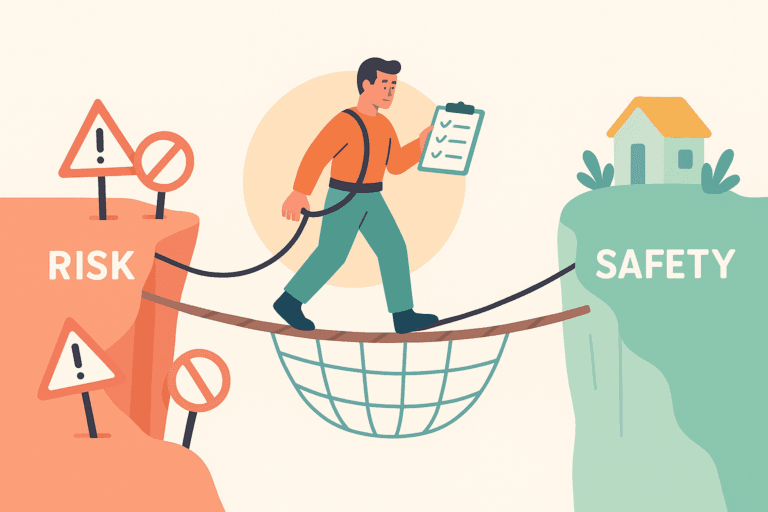
Table of contents:
Caution: the quiet skill that keeps decisions from getting expensive
It is not cowardice in a nicer jacket
A lot of people hear the word caution and immediately picture someone timid, overcareful, standing by the pool in a towel while everyone else cannonballs in and pretends they're "living fully." But healthy caution is not about hiding from life. It's about not mistaking motion for wisdom. A cautious person can still be bold, ambitious, curious, adventurous - all of that good stuff. They just don't hand the steering wheel to impulse and call it freedom. Very different vibe.
In everyday life, caution means you don't treat every urge like a command from heaven. You feel interested, flattered, tempted, rushed, excited - and then you pause long enough to ask, "What exactly am I walking into here?" Tiny pause on the outside. Massive difference on the inside.
It notices the hidden price tag
One of the clearest signs of caution is the habit of looking past the shiny front window. Not only, "What do I get if this goes well?" but also, "What could wobble, and what would that cost me?" Time. Money. Energy. Trust. Reputation. Peace of mind. Sometimes the bill doesn't come in cash, which is exactly why people miss it. That habit also strengthens planning, because once you see the likely costs up front, you're far less likely to build your week, budget, or expectations on wishful thinking.
Cautious people tend to scan for weak spots almost automatically. They read the contract twice. They ask what happens if the vendor misses the deadline. They wonder whether the cheap option will end up being the expensive one wearing a fake mustache. This overlaps a lot with critical thinking, because caution is not vague suspicion or doomy vibes. It's concrete evaluation. You're not being dramatic. You're just checking where the floorboards creak before the dinner party starts.
It cools emotion before emotion starts making policy
Another piece of caution is restraint. Not repression - restraint. The ability to stop a hot feeling from turning into a fast decision. Excitement can be risky, honestly, just as risky as anger sometimes. So can relief. So can loneliness. And if an old hurt is still steering more of your reactions than you realize, learning ways to work through resentment can help you separate today's decision from yesterday's emotional residue, which is often where caution gets blurry. A surprising number of regrettable choices aren't made because people are foolish. They're made because the feeling of the moment is louder than the consequences of next Tuesday.
A cautious person doesn't become robotic or cold. They just refuse to let a mood sign documents on their behalf. Feelings get a vote, sure. They just don't get dictatorship rights. More of us could use that little constitutional reform, if we're being honest.
It prefers clear steps over dramatic leaps
Caution also shows up in the way a person moves through decisions. They like reversible steps when possible. They test before they commit. They ask for details before they agree. They set limits in advance so they don't have to invent boundaries while someone is staring at them waiting for an answer. If the choice is big, they break it into stages. If the promise is vague, they ask for specifics. If something feels rushed, they get twitchy - as they should.
This quality can make people look steady. Not flashy, maybe. Not the loudest person in the room. But in real life - jobs, money, hiring, parenting, partnerships, moving, trusting, signing things you probably should not sign half-awake - steadiness beats drama more often than we like to admit. Quietly, repeatedly, almost annoyingly.
What gets easier when caution gets stronger
You make fewer avoidable mistakes
The most obvious benefit of caution is also the least glamorous: fewer dumb losses. Less "I absolutely should have seen that coming." Less paying twice because you bought fast and checked later. Less volunteering for commitments that felt flattering at 2 p.m. and like a hostage situation by Thursday morning. And when caution is supported by diligence, you don't just avoid sloppy decisions in theory - you also follow through with the kind of care that prevents small misses from becoming expensive problems.
Caution doesn't give you a magical shield. Life still surprises careful people. But it does cut down the nonsense. It helps you catch preventable trouble while it's still small, boring, and cheap instead of dramatic, expensive, and somehow involving three extra people. That matters more than a lot of motivational advice lets on.
Other people trust your judgment more
When someone is consistently cautious in a healthy way, they start to feel solid to other people. Not dull. Solid. They're less likely to overpromise, miss obvious holes, or drag everyone else into a mess that could have been prevented by one extra question and five more minutes of attention. Teams notice that. Partners notice that. Clients - oh, clients definitely notice that.
This is one reason caution quietly strengthens reliability. You stop acting shocked by risks that were visible from the moon. You communicate earlier. You prepare better. You commit more honestly because you've actually looked at what the commitment requires. And trust built that way has a very grounded feel to it. Not performative. Useful.
Your energy stops leaking into damage control
People often assume caution slows life down. In the moment, sometimes yes. Over a month, though? Over a year? It often saves a wild amount of energy. A cautious decision might cost you one extra afternoon. A careless one can chew through six weeks in repairs, follow-up emails, apologies, awkward calls, refund requests, calendar reshuffling, and that special flavor of self-annoyance that appears at 1:17 a.m. for no reason at all.
That's the sneaky gift of caution: it buys bandwidth. It protects your attention for work that actually matters instead of forcing you to become the full-time janitor of your own rushed choices. Which, let's be honest, is not a promotion anybody asked for.
You can aim high without acting reckless
This is the bit people often miss. Caution doesn't weaken ambition. It matures it. In fact, strong goal orientation works better with caution in the room, because clear goals are much easier to reach when your path toward them is built on reality instead of adrenaline. A cautious person can absolutely take risks, but they usually take risks with structure: clearer terms, better timing, fallback options, smaller first bets, real due diligence instead of vibes and caffeine. They're less likely to confuse "brave" with "wildly unprepared."
That makes growth sturdier. You can launch something, change jobs, move cities, start a partnership, ask for funding, hire people - all the exciting stuff - without behaving like consequences are an urban legend. Healthy caution lets you be daring without being careless. And emotionally, that's huge. Instead of white-knuckling every leap and hoping the universe is in a good mood, you move with a deeper kind of confidence: not "nothing will go wrong," but "if something does, I'm not walking in blind." That lands differently, doesn't it?
What weak caution tends to do to a life
You agree before you understand
One of the classic signs of weak caution is the premature yes. You hear the appealing part and commit before checking the boring part. The timeline. The fine print. The expectations. The temperament of the person involved, which is not a small detail, by the way. The real cost, not just the advertised one. Then later you discover that the "great opportunity" came bundled with chaos, pressure, or weird obligations nobody mentioned in the glossy opening pitch.
This shows up everywhere: work, money, dating, friendship, family arrangements, side projects that somehow become second jobs. Not because someone is foolish in general, but because speed can feel good. Relief-producing, even. Decision made, box ticked, moving on. Until the invoice arrives. Emotional or literal.
You become easier to push, flatter, or rush
When caution is weak, pressure works on you a little too well. Someone throws out a deadline, says "I need an answer now," wraps the whole thing in urgency and ego-stroking - and suddenly your judgment gets foggy. People who lack caution are often not lacking intelligence. What they're lacking is friction. There isn't enough internal resistance between outside pressure and inside compliance. Sometimes that isn't just a caution issue - it can also point to shaky confidence, because people who don't fully trust their own judgment are much easier to hurry into somebody else's plan.
That can make you vulnerable to manipulative sales tactics, lopsided partnerships, one-sided favors, and roles you never really wanted in the first place. If you tend to decide faster when you feel cornered, admired, guilty, or afraid of missing out... well, there's a clue. That's not random. That's caution waving from the back of the room, trying to get your attention.
Small oversights turn into recurring messes
Weak caution rarely wrecks a life in one cinematic explosion. Usually it nibbles. You skip one detail. You assume the other person understood. You trust your memory instead of writing it down. You ignore a weird feeling because you don't want to seem difficult, picky, high-maintenance, whatever. Then the same kind of problem keeps returning in new outfits like it's doing a little seasonal collection.
The result is a frustrating pattern: you work hard, you mean well, and yet some slice of your effort keeps getting burned on preventable trouble. A missed attachment. A vague agreement. A purchase made without reading the return terms. A job accepted without asking how success is measured. Tiny doors, huge drafts.
Your self-trust starts wearing thin
There's an emotional cost too, and it's not small. When you repeatedly ignore risk and then get hit by the predictable consequence, your mind notices. Of course it does. It starts doubting your judgment. Maybe not dramatically. More like a quiet wince every time something new excites you: "Okay... but what are we missing this time?"
That erosion matters. People talk a lot about confidence, but caution is one of the things that makes confidence feel real instead of theatrical. Without it, confidence can become a costume. You may look spontaneous and fearless from the outside while feeling oddly unsafe inside your own choices. And that is exhausting. Truly. A person can get very tired from constantly recovering from situations they might have prevented with one slower breath and two better questions.
How to build caution without turning into a worrier
Install a waiting rule for important yeses
If your trouble starts with quick agreement, don't rely on willpower alone. Make a rule. Simple, clear, slightly annoying in the best possible way: "I do not say yes to important things in the same conversation." Important might mean money, contracts, travel, new roles, shared projects, big purchases, anything that can quietly grow teeth later. Your job isn't to be difficult. Your job is to give your judgment enough time to wake up and put its glasses on.
One sentence can change a lot: "This looks interesting. I want to think it through and get back to you tomorrow." Clean. Adult. Calm. Weirdly effective. Also, people who hate that sentence are often giving you useful information for free.
Write a downside note before big moves
Before a major decision, open a note and answer two slightly ugly questions: "What would make this annoying in a month?" and "What would make this genuinely costly?" Then under each risk, add one line: what would reduce it? That's it. Not a grand report, not a spreadsheet opera. Just enough to force your brain past the honeymoon phase.
This is especially helpful when you're excited. Excitement is lovely. It also has terrible eyesight. You noticed that too, right?
Shrink the bet whenever you can
Caution grows fast when you stop treating every decision like it must be all-or-nothing. Instead of diving in headfirst, ask whether there's a smaller first version. Can you test the service before signing a full contract? Try the collaboration on one project? Visit the area twice before moving? Run the offer with a tiny budget? Borrow before buying? Shadow before accepting?
Small tests teach your nervous system something very sane: you do not have to choose between recklessness and paralysis. There is a middle lane. Blessedly. And once you remember that, decisions start feeling less like cliff jumps and more like actual choices.
Make your non-negotiables visible
A lot of bad decisions happen because people define their standards too late - usually while stressed, flustered, or being stared at by someone who wants a fast answer. So do it earlier. Write down your deal-breakers for one area of life. Work offers, partnerships, lending money, hiring, whatever tends to get messy for you. What must be clear before you agree? What red flags mean no? What proof do you need, not just promises?
And for repeatable tasks, use a short checklist. Not because you're becoming a bureaucrat with a clipboard for a soul. Because memory is lazy, attention is patchy, and caution loves backup.
Study one past miss without turning it into a courtroom drama
Pick one decision you regret and review it like a mechanic, not like a tragic poet in the rain. Where did the warning sign show up? What did you ignore? What question should you have asked? What condition would protect you next time? Then pull one new rule from it. Just one. That's enough.
If you want to go one step further, ask one sensible person to poke holes in an upcoming decision. Not someone who panics at everything. Not someone who says "go for it!" to literally any plan involving a PDF and a dream. Someone balanced. Borrowed caution still counts. Sometimes it counts a lot.
Should caution be your next growth focus?
Not always. Some people really do need more caution. Others are already checking, rechecking, overthinking, and calling it wisdom when it's actually anxiety wearing office clothes. If that sounds familiar, it helps to understand perfectionism without the weird myths, because sometimes what looks like caution is really an attempt to feel safe by controlling every variable. If you already spend weeks stalling on every decision, caution may not be the missing ingredient. Courage might be. Or clarity. Or plain old rest. Sometimes what is missing is a steadier kind of optimism - not blind positivity, but the belief that you can handle uncertainty without assuming every choice is secretly a trap. If that sounds like your pattern, it may help to learn how to stay optimistic so caution stays grounded in reality instead of quietly turning into chronic worst-case thinking.
It helps to look at your real pattern, not just the trait that sounds respectable on paper. Do you keep landing in preventable messes because you move too fast, trust too fast, or commit before you understand what's actually being asked of you? Then yes, caution probably deserves attention. If your real struggle is hesitation, exhaustion, or low self-trust, start there instead. For some people, chronic hesitation eventually makes life feel jammed in neutral, and that is a different problem from healthy caution altogether. Otherwise you end up trying to fix the wrong thing very earnestly, which is such a classic self-improvement hobby.
If you want a cleaner read on what deserves your attention right now, AI Coach can help sort it out. It's a practical way to see which skill matters most at this moment and get a simple plan for the first three days, so you're not just circling your habits and calling that progress.
Frequently Asked Questions (FAQ)
What is caution in simple terms?
Caution is the ability to slow down enough to notice risks, check details, and choose with awareness instead of pure impulse. Not fear. More like thoughtful self-protection with decent timing.
Is caution the same as anxiety?
No. Anxiety tends to imagine danger everywhere and can make action feel impossible. Caution is more grounded. It asks specific questions, looks for real weak points, and helps you move with better preparation instead of freezing in place.
Can you be too cautious?
Yes, absolutely. When caution gets rigid, it can slide into avoidance, chronic delay, or perfectionism. Healthy caution helps you act wisely. Excessive caution keeps demanding certainty from a life that simply does not offer it.
What is the difference between caution and indecisiveness?
Caution checks before choosing. Indecisiveness keeps circling without landing. A cautious person eventually decides because they've gathered enough information. An indecisive person often keeps searching because no amount feels emotionally safe enough. Different engine, same parked car.
Why do intelligent people still make careless decisions?
Because intelligence does not cancel urgency, ego, loneliness, pressure, relief, or excitement. A lot of careless decisions happen in emotionally loaded moments, not calm ones. Smart people can still be rushed by flattery or seduced by convenience. Very human, annoyingly human.
Does caution make you slower at work?
Sometimes in the first few minutes, yes. Over the longer run, it often saves time because you make fewer avoidable mistakes, fewer vague commitments, and fewer expensive reversals. A short pause up front can prevent a long repair later. That's a pretty good trade.
Is caution useful in relationships, or does it create distance?
It depends on how you use it. Healthy caution helps you notice red flags, define boundaries, and avoid trusting blindly. That protects relationships from preventable disappointment. Unhealthy caution can turn into guardedness and make closeness harder. The key is discernment, not suspicion.
How can I stay cautious when someone pressures me to decide immediately?
Use a prepared sentence before you need it. Something like, "I don't make important decisions on the spot," or "Send me the details and I'll reply tomorrow." Pressure loses a lot of power when you stop improvising your boundaries in real time.
Does caution kill entrepreneurship or creativity?
No. Good caution actually improves both. It helps creative people test ideas before overinvesting, and it helps entrepreneurs take smarter risks instead of random ones. Caution doesn't kill boldness. It keeps boldness from turning into expensive theater.
What are signs that my caution is weaker than I thought?
Look for repeating patterns: quick yeses you later regret, getting pulled in by urgency, skipping details because they feel boring, trusting promises without checking, and spending a weird amount of time on damage control after "small" oversights. If the same kind of mess keeps visiting your life, caution may be the missing filter.
How do I teach caution to a child without making them fearful?
Teach it as thinking, not as threat. Ask calm questions: "What could happen here?" "What's the safer way?" "What should we check first?" Children learn caution best when adults model it without panic. The goal isn't to make them scared of mistakes. It's to help them notice consequences before consequences start teaching in a much harsher voice.
What is one daily habit that strengthens caution fast?
Choose one decision each day and delay it on purpose until you've checked one more fact, one more condition, or one more consequence. Not forever. Just long enough to interrupt autopilot. That small bit of friction between impulse and action - that's where caution starts getting stronger.