
There's a very specific kind of annoyance in walking away from a conversation looking perfectly calm while, inside, your brain is already staging the director's cut of what you should have said. "Actually, no, that doesn't work for me." Ah yes. Too late now. Maybe it was the lowball offer, the ridiculous deadline, the family plan that somehow boomeranged into your responsibility, or that "quick favor" which - fun twist - just ate your entire Saturday.
Negotiation is the skill of shaping the terms instead of just swallowing them whole. If you keep saying yes too fast, asking too late, or feeling strangely bitter after you've "agreed," there's a decent chance this is the muscle that needs attention.
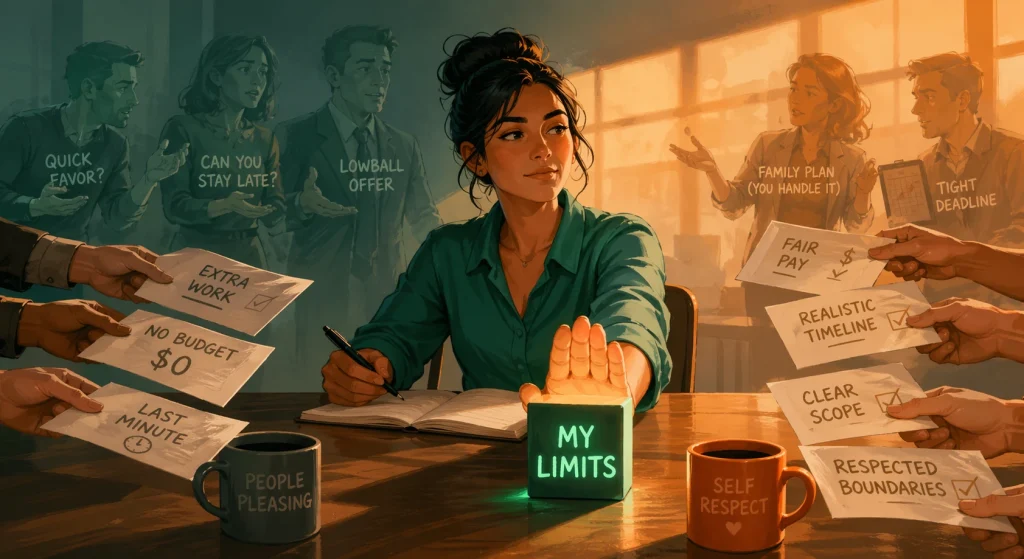
Table of contents:
Negotiation: where needs, limits, and reality meet
It starts before the conversation starts
A lot of people imagine negotiation begins when everyone sits down and starts talking. Not really. It usually starts earlier, in that very unsexy moment when you get honest with yourself about what you actually want. Not the blurry version. The real one. What are you asking for? What matters most? What can flex, and what absolutely can't? That's basically planning in daily life, and without it people end up improvising their limits under pressure. Which is... not ideal. If you don't know your own edges, you walk into the room with soft outlines, and soft outlines get pushed around fast. Salary, deadlines, rent, chores, project scope, who's driving to the airport at 5 a.m. because everyone else has suddenly turned into decorative wallpaper - same principle.
It is not just about positions
Healthy negotiation is less "I need to win this point" and more "What is each person actually trying to protect here?" That shift matters more than people think. A position is the visible demand: "I need this by Tuesday." "I want a lower price." "I can't stay late." Under that there's usually something messier and more human - budget stress, time pressure, pride, fairness, fatigue, fear of risk, family logistics, plain old ego. Good negotiators listen for that lower layer. If you only argue with the surface statement, the conversation stiffens up in about thirty seconds. But if you understand what's underneath, options start to appear. Not magical fairy-dust options, sure, but real ones. Useful ones.
Listening does real work here
This is the part people skip because talking feels more powerful. But negotiation isn't verbal arm-wrestling. It's information-gathering under a bit of social heat. When someone says, "That's our standard rate," or "We need this urgently," a strong negotiator doesn't instantly collapse or puff up. They get curious. Standard compared to what? Urgent because of what? Is the deadline truly fixed, or just preferred because it would make somebody's life easier? Listening well helps you catch constraints, yes, but also bluff, hesitation, hidden flexibility, and those tiny cracks in confidence people reveal without meaning to. The more you can think logically, not emotionally while this is happening, the easier it is to separate facts from pressure. Humans leak clues everywhere. You just have to stay calm enough to notice them.
It needs clarity, backbone, and a bit of emotional control
Negotiation also means saying simple things plainly. Not harshly. Plainly. "I can do that, but not by tomorrow." "I'm interested in the role, though the salary would need to be higher." "I want to help, but I can't carry the whole thing myself." Sounds easy on paper. Then your nervous system decides directness is rude, or selfish, or somehow illegal. Add a little tension, a persuasive person, or that familiar fear of disappointing someone, and a lot of grown adults start speaking in fog. Good negotiation cuts through the fog. It mixes self-knowledge, listening, flexibility, direct communication, and boundaries that don't melt the second somebody sighs dramatically. Which, let's be honest, some people are very good at.
What gets easier when you stop swallowing the first terms
You stop living inside other people's defaults
One of the best things negotiation gives you is very practical: the first offer stops feeling like a sacred text dropped from the heavens. A surprising number of terms in life are more flexible than they first seem. Pay, deadlines, job titles, deliverables, fees, responsibilities, even household routines often start as rough suggestions and harden only because nobody questions them. Once your negotiation skill improves, you stop stepping obediently into whatever frame was handed to you. You start testing it. Quietly. Calmly. And that can change your income, workload, time, and stress level more than you'd expect - no dramatic soundtrack required.
Relationships get cleaner, not colder
Some people hear "negotiation" and imagine becoming transactional, difficult, exhausting. Honestly, the opposite is more common. Good negotiation reduces resentment because expectations get named earlier, before they rot. Instead of silently agreeing to host every holiday and then glaring at the potato salad like it personally betrayed you, you say what you can do and what you can't. Instead of taking on extra work and privately resenting your manager by Wednesday afternoon, you talk about bandwidth, trade-offs, and timing. Negotiation, when it's healthy, isn't about beating people. It's about making reality visible before frustration starts breeding in the corners.
Your career benefits in small, compounding ways
This skill matters at work far beyond the famous salary conversation, though yes, salary gets all the attention. Negotiation helps when a client wants a rush job without rush pay, when your role quietly expands but your title doesn't, when a team expects miracles from a calendar that still - last I checked - only has seven days in a week. People who negotiate well clarify scope, ask for resources, challenge vague promises, and protect their time before chaos becomes the new normal. Over the years, those small moments pile up. Better terms. Better trust. Fewer situations where you're carrying too much and calling it professionalism because it sounds nicer.
You feel less trapped in important moments
There's an emotional payoff here too, and it's not small. When you know how to negotiate, hard conversations stop feeling like narrow hallways with no exits. You remember there are usually moves available: ask, pause, reframe, trade, delay, clarify, even walk away. That does something lovely to self-respect. You stop treating your own needs like awkward interruptions to the main event. You also get less spooked by other people's disappointment, which is useful because some folks act personally offended whenever you show up with a spine. They'll live. The deeper gift is steadiness. You start entering tense conversations with the sense that you can stay present without disappearing inside the discomfort, and that changes how life feels from the inside out. Subtle shift, big ripple.
How weak negotiation quietly makes life smaller
You agree in public and resent it in private
One classic sign of weak negotiation is the fast yes followed by the slow simmer. You agree because you want to be easy, helpful, nice, cooperative, low-maintenance - pick your favorite label. It makes the moment feel safer. Then the price shows up later. The project balloons. The favor stretches. The pay feels thin. The arrangement gets lopsided. And now you're irritated, but also a little embarrassed, because some part of you knew the deal was off from the beginning. That mix of resentment and self-blame? It really wears a person down.
Vague agreements become expensive
When negotiation is shaky, people often skip the clarifying questions because asking feels awkward. So they leave things fuzzy. What exactly is included? Who is responsible for what? What happens if the timing slips? Is the price fixed, flexible, or tied to extra work? Nobody asks, everybody smiles, and then later - surprise - the ambiguity sends the bill. In money, in time, in emotional friction. A weird amount of adult stress is just the aftershock of an agreement that should have been clearer on day one.
Politeness turns into self-erasure
Another problem: some people confuse negotiation with conflict, and conflict with danger. So they avoid asking, pushing back, or even naming what they prefer. They call it being nice. Sometimes it is. Sometimes it's fear in a cardigan. If that lands a little too close to home, it often overlaps with when caring turns into self-erasure, because over-accommodating other people can look kind on the surface while slowly wiping out your own position. If that pattern repeats, other people's wishes start dominating by default. Not because they're monsters, usually. Just because unspoken needs have zero leverage. Silence tilts the room. And after a while you may feel invisible in situations where, technically, you were there the whole time. Rough feeling. Really rough.
Your nervous system starts treating every ask like a risk to belonging
This is the deeper ache under weak negotiation. For a lot of people, asking for more doesn't feel like a normal part of life. It feels like a threat to approval, safety, likability, maybe even love. So the body reacts first: tight throat, faster heart, thoughts scrambling like socks in a dryer. Then out comes a sentence so soft it practically apologizes for existing - or no sentence at all. If that happens often enough, you start building your life around avoiding those moments. Smaller asks. Smaller standards. Less room to move. That's why poor negotiation doesn't just cost you things on the outside. It changes something on the inside too. You train yourself to expect less, and if you're not careful that expectation settles in and starts feeling like personality. Sneaky little thing.
Training negotiation without turning into a shark
Map your range before you enter the room
Before any important conversation, sketch out three versions of the outcome: the strong one, the acceptable one, and the one you'd decline. Money, time, scope, responsibilities, even family plans - all of it. Not as some grand manifesto, just as a reality anchor. If you're negotiating a freelance project, maybe the strong outcome is your full rate with sane timing, the acceptable one is a smaller scope at that rate, and the no-thanks point is a discount plus a rush deadline. Tiny exercise, big effect. It stops you from inventing your standards while under pressure, which is exactly when standards turn to pudding.
Turn assumptions into questions
Weak negotiators often spend a lot of energy reacting to stories in their own heads. "They'll think I'm greedy." "This deadline must be fixed." "They probably can't move on price." Maybe. Maybe not. A better habit is to trade one assumption for one question. "How much flexibility is there on the timeline?" "What budget range did you have in mind?" "If the launch date stays, what part of the scope could shift?" Questions bring reality into the room. They also lower the temperature a bit, which helps even when you are, internally, sweating through your shirt.
Practice the summary-then-proposal move
Here's a useful little drill: before making your ask, summarize the other person's concern in one clean sentence. "I hear that you need coverage this week and don't want the team overloaded." Then make your proposal. "I can help on Thursday, but I can't take the whole weekend." It does two things at once. It shows you were listening, and it keeps the conversation from turning into a tug-of-war between two defensive people. Try it in ordinary life first. Roommates, family plans, client work, mildly irritating scheduling messes - it works beautifully in all the usual human chaos.
Use low-stakes reps on purpose
Don't wait for the salary meeting of the century to start practicing negotiation. That's like deciding to learn swimming during a storm. Bold, yes. Smart, not especially. Practice in small places. This is especially helpful if you notice fear of change showing up before you even call it fear, because tiny changes to the usual script teach your nervous system that change is not automatically danger. Ask for a later checkout. Suggest a different meeting time instead of auto-accepting the worst one. Push for clearer deliverables before saying yes to a side project. Offer two options when friends are making plans instead of going along and then grumbling later to the most patient person in the group chat. Low-stakes reps matter. They teach your body that asking, clarifying, and countering are survivable.
Review the conversation with a cool head
After a negotiation, give yourself five minutes with three questions: What did I want? What mattered to them? Where did I give ground too early - or hold too hard? That last question matters. Some people don't lack negotiation skill so much as calibration. They either cave instantly or come in rigid and miss perfectly workable middle ground. A short debrief helps you catch your pattern. Ah, I soften the second someone sounds disappointed. Or, right, I keep arguing the point instead of exploring the reason underneath it. That kind of self-observation is gold. Slightly annoying gold, maybe, but gold all the same. Skill grows faster when you study your own moves without turning every conversation into a giant moral trial about your character.
Should negotiation be your next growth task?
Maybe. Maybe not. Not everyone needs to focus on negotiation first. Some people need firmer boundaries, steadier confidence, better emotional regulation, or plain old rest because they're trying to have hard conversations on a nervous system that's already toast.
It helps to look at the actual pattern. Do you keep accepting terms you dislike, avoiding important asks, or ending up resentful because you never really spoke up in the first place? Then yes, negotiation probably deserves your attention. If the bigger issue is fear, burnout, depression, or a relationship where speaking up genuinely feels unsafe, start there instead. And if what you mostly feel is a flat kind of disconnection rather than conflict avoidance, it may be more useful to look at that hollow feeling as a pattern, because not every quiet "fine" is really a negotiation issue. Wrong priority, wrong result. Happens all the time.
If you want a cleaner read on what matters most right now, AI Coach can help you sort out your growth priority and give you a simple plan for the first three days. Sometimes that kind of clarity is a lot more useful than declaring, with great passion, that you're going to "be more assertive" and then forgetting all about it by Tuesday.
Frequently Asked Questions (FAQ)
What is negotiation in simple terms?
Negotiation is the skill of working out terms when two sides want slightly different things. It might be about money, time, workload, boundaries, responsibilities, or expectations. In real life, it's less "high-stakes business drama in a glass office" and more "How do we make this arrangement fair, workable, and clear?" Good negotiation isn't about crushing the other person. It's about getting enough clarity and movement that nobody has to rely on guesswork, guilt, or those dramatic passive-aggressive sighs people somehow think are subtle.
Can negotiation actually be learned, or are some people just born good at it?
It can absolutely be learned. Some people grow up around direct, healthy bargaining and pick it up early. Others grow up in homes where asking felt rude, pointless, or unsafe, so they start later. But the skill itself is trainable. You can learn to prepare better, ask sharper questions, hear what's underneath a demand, and tolerate the discomfort of not agreeing instantly. Most strong negotiators were not born strolling out of the womb with perfect boundaries. They got reps.
Is negotiation the same as being persuasive?
Nope. Persuasion is about influencing how someone thinks or feels. Negotiation is about shaping the terms of an agreement when interests don't fully match. They overlap, obviously, but they're not twins. You can be persuasive and still be terrible at protecting your own position. And you can be a very solid negotiator without being flashy, charismatic, or the loudest voice in the room. In negotiation, clarity, listening, timing, and boundaries usually matter more than charm.
How do I negotiate if I hate conflict?
Start by dropping the idea that negotiation has to feel like a fight. Most healthy negotiation sounds calm, specific, and honestly a little boring. Use questions. Name constraints. Offer options. Summarize the other side before making your ask. If conflict makes your body tense up, practice in lower-stakes situations first so your nervous system can learn that disagreement does not automatically mean rejection. For many people, the issue isn't a lack of logic. It's fear of tension. Different problem, different training.
When should I walk away instead of keep negotiating?
Walk away when the terms cross a clear limit, when the other side keeps moving the goalposts, or when the conversation gets so manipulative that real agreement is basically off the table. Also walk away when you catch yourself rationalizing an outcome you already know you'll resent. Negotiation is not a sacred duty. Sometimes the strongest move is simply, "That doesn't work for me, so I won't continue." Not dramatic. Just clean.
What is the biggest mistake people make in negotiation?
The biggest one is walking in without knowing their own range. Close behind that: talking too much and asking too little. People often rush to defend their position before they even understand what is driving the other side. Another very common mistake is softening the ask before anyone has pushed back. You know the move - smiling, hedging, discounting yourself, practically negotiating against yourself for free. Painful to watch. Extremely common.
Should I make the first offer, or wait for the other side?
It depends, but making the first offer can be smart when you understand the market or have a well-grounded number. First numbers shape the conversation more than people expect. That said, if you're going in blind, asking questions first may be wiser. In salary talks, for example, many people prefer to learn the range before naming a number. The point isn't to follow one rigid rule. The point is to avoid blurting out a weak number just because the silence made you nervous. Which, yes, happens a lot.
Can introverts be good negotiators?
Very much so. Introversion is not a negotiation handicap. In fact, many introverts do well because they listen carefully, prepare thoroughly, and don't feel the need to dominate the room with noise. Negotiation rewards steadiness more than volume. You do not need to be the loudest person at the table. You need to be clear, observant, and willing to speak up when it counts. Quiet and effective is still effective. Sometimes more effective, actually.
How does negotiation help in personal relationships?
It helps a lot, because relationships run on hundreds of tiny agreements that nobody really calls agreements. Who handles what, how time gets shared, what feels okay, what feels like too much, what support looks like, how decisions get made. Without negotiation, couples and families often rely on assumptions, and assumptions are slippery little creatures. Healthy negotiation makes room for preferences, limits, repair, and fairness. It doesn't make love less warm or romantic. It makes it less confusing.
What is one small thing I can do today to get better at negotiation?
Pick one ordinary conversation and do two things differently: ask one clarifying question, then make one clear request without apologizing for existing. Something simple. "Can we move this to Thursday?" "What exactly would be included?" "I can help for an hour, not the whole afternoon." That's enough for today. Negotiation gets stronger through real reps, not through reading fifty clever phrases and then continuing to agree to things you didn't want in the first place.