
There's a special kind of irritation in ending a busy day with the wrong things done. The inbox is cleaner, the tiny requests are handled, you even replied to that message about Friday lunch, and yet the thing that actually mattered is still sitting there untouched like a sulky houseplant.
That is often a prioritization problem: not lack of effort, but effort spent in the wrong order. Prioritization is the skill of deciding what deserves your attention first while the world keeps jingling keys in your face. If your days feel full but oddly unconvincing, this may be the missing piece.
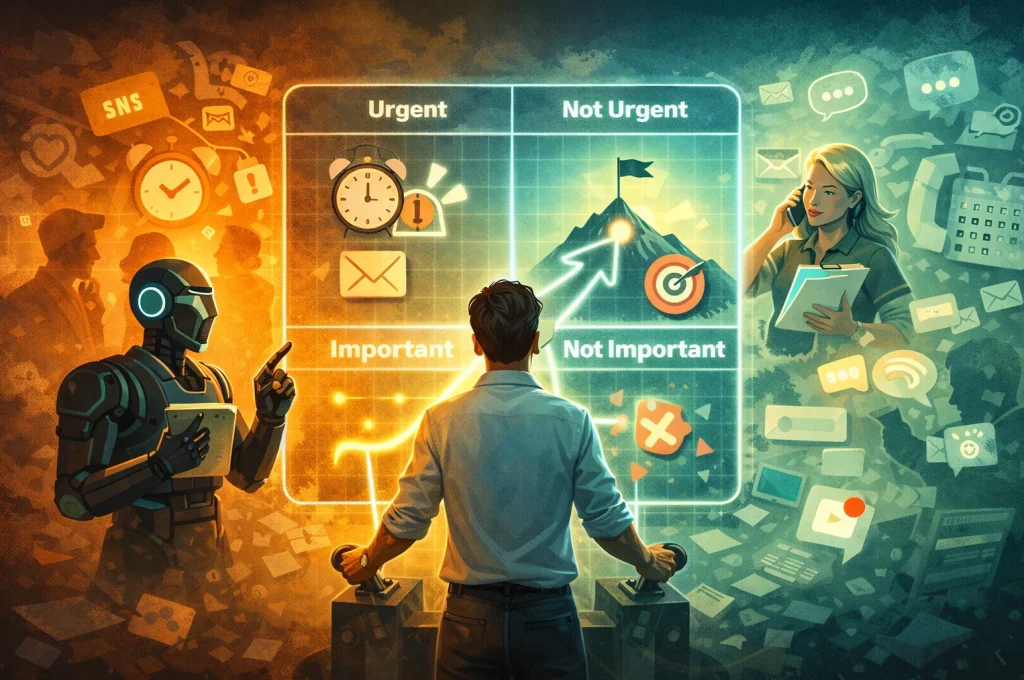
Table of contents:
Prioritization: the skill of deciding what deserves first place
It is choosing, not just staying busy
Prioritization is not the talent of squeezing twenty things into one afternoon. It is the quieter skill of seeing which two or three things actually deserve the front row. Someone with strong prioritization does not treat every request like it arrived with royal paperwork. They pause, compare, and decide what would move the day, the project, or the relationship in a meaningful way. In real life, that can look very ordinary: finishing the proposal before tidying the spreadsheet, preparing for the hard conversation before answering cheerful but nonessential messages, paying the bill before hunting for a better notebook. Glamorous? Not even slightly. Useful? Constantly.
It weighs consequence, not just speed
The skill also involves judging weight, not just speed. A quick task is not automatically the right task. People who prioritize well tend to notice impact, timing, and sequence. Impact asks, "What changes if I do this?" Timing asks, "What becomes messy if I leave it?" Sequence asks, "Does something else depend on this first?" That last one matters a lot. Sometimes the right priority is not the most exciting thing, but the thing that unlocks five other things. That is also where strategic thinking quietly supports prioritization, because once you start noticing dependencies, you stop choosing by mood and start choosing by leverage. Send the brief, then the team can work. Book the appointment, then the paperwork can start. Decide the budget, then the rest of the plan stops wobbling around like a folding table on uneven ground.
It includes trade-offs, which is the annoying part
And here is the part people hate, because, well, it pinches: prioritization includes letting some worthy things wait. Not bad things. Not silly things. Worthy things. If you say your health matters, your job matters, your family matters, your side project matters, your inbox matters, and all of it must happen now, your brain hears one message only: panic, but organized. A mature sense of priority accepts trade-offs without turning them into moral drama. It can say, "This matters, but not first." Or "This gets done well, and that gets done lightly." The skill is not only about choosing what wins. It is also about tolerating what does not.
It stays flexible when reality changes
Good prioritization is not rigid, either. The best prioritizers revise when reality changes. A sick child, a broken system, a real deadline, a client emergency, a body that is clearly running on fumes - these can reshuffle the order. The point is not to cling to yesterday's plan like a Victorian aunt protecting the silverware. The point is to re-rank consciously instead of reacting blindly. That is why prioritization shows up as calm judgment, clearer boundaries, better sequencing, and a surprising amount of emotional honesty. To prioritize well, you have to admit what matters most, what matters later, and what, for now at least, can survive without you fussing over it.
What starts getting easier when you rank things well
Your best hours stop getting wasted
When prioritization improves, one of the first changes is almost physical: your best hours stop getting spent on low-stakes clutter. Instead of burning fresh morning attention on email shrapnel, you use it on thinking, building, deciding, or preparing - the stuff that is harder to fake later. That shift alone can change output more than working longer ever does. The same person, same calendar, same coffee mug, very different results, because the sharpest part of the day is no longer being fed to trivia. And yes, this feels good. There is relief in ending the afternoon knowing the real thing moved before the nibbling little tasks had their turn.
Big goals finally get real oxygen
When you prioritize well, long-range goals stop surviving only as nice thoughts with excellent intentions. The course gets studied before the weekend disappears. The portfolio gets updated before the job search becomes desperate. The savings plan gets handled before the month quietly eats the money. Prioritization gives important but nonurgent things a seat at the table before they show up later wearing fake mustaches called crisis, regret, or why didn't I do this sooner. It is a deeply unglamorous skill, but it is how larger changes actually happen. Not because you became a motivation superhero. Because you kept making room for what mattered before noise claimed the room.
People get clearer signals from you
There is also a social benefit. People trust you more when they can feel that you know what comes first and can explain it cleanly. In everyday work, that is part of what starts changing when people can count on you: your yes means something, your timing sounds realistic, and other people do not have to guess whether you are simply being polite. Teams work better when someone can say, "This goes today, that can wait, and this third thing needs a decision before either of them." Families work better too, frankly. Even in ordinary life, prioritization helps you give less vague yeses, fewer panicked maybes, and more realistic timing. That reduces accidental disappointment. It also makes you easier to work with because you stop behaving as if every incoming request has equal rights to your nervous system. Clear priorities create clearer expectations. Those are worth gold, or at least a much quieter Tuesday.
Your stress becomes less smeared across everything
Weirdly, prioritization does not remove pressure so much as clean it up. You may still have a lot to do. Life remains life. But the stress stops feeling smeared across everything. You know what truly needs attention, what can be postponed without catastrophe, and what is merely making noise because it arrived in bold font. That clarity protects self-respect. When you choose deliberately, you are less likely to end the day with that grubby feeling of having worked hard and betrayed yourself anyway. Over time, this builds a calmer form of confidence: not I can do everything, but I can tell what deserves me first. Honestly, that is a sturdier sentence.
The price of treating everything like top priority
Urgency starts wearing the crown
When prioritization is weak, the loudest thing usually wins. The newest email wins. The nearest deadline wins. The task attached to the pushiest person wins. Meanwhile the quieter but more important work waits in the corner like the sensible friend nobody listens to at the party. This creates a strange life pattern: you stay responsive, maybe even admired for being quick, yet the work that would really change things keeps slipping. Urgency and importance are not twins. One shouts. The other often clears its throat once and then goes silent. Without prioritization, guess which one your day keeps marrying. No wonder you feel oddly faithful to the wrong problems.
You finish things and still feel behind
A weak sense of priority can make a person very productive in the least comforting way. You tick boxes. You clear messages. You solve tiny problems. And by evening there is still that awful sense that the day missed its point. Why? Because completion is not the same as progress. Five easy wins do not equal one meaningful move if the meaningful move is the thing that actually affects your goals, income, health, or relationships. This is why some people look busy for years and still feel stalled. They are not doing nothing. They are doing too much of what matters less.
Other people quietly take over your order
If you do not rank your own priorities, other people will happily do it for you, often without malice and with terrible results. A manager asks for a quick change. A friend wants an answer right now. A family member drops a task in your lap. An app flashes a red bubble like it has summoned the king. None of these is evil. Still, if you have no inner order, your attention becomes public property. That is usually the moment when assertiveness makes daily life less messy, because a calm, clear no can keep somebody else's urgency from colonizing your whole day. Over time that breeds resentment. You tell yourself you are being helpful, flexible, easygoing. Sometimes, though, this is less about kindness and more about people pleasing, where other people's urgency slips into the driver's seat before you have even checked your own map. Sometimes you are. Sometimes you are just unavailable to your own life, which is a sad little trick to keep playing on yourself.
The exhaustion gets weirdly personal
This is the emotional tax people miss. Poor prioritization is tiring not only because you do too much, but because you keep spending serious energy on second-tier things while first-tier things hang over you unfinished. That creates double strain. You are busy and guilty at the same time. Without enough emotionality, it also becomes harder to notice your own frustration, fatigue, and dread early, so the body keeps paying for priorities the mind never consciously chose. You work all day and still carry the mental weight of what remains untouched. After a while, the mind gets cynical. Apparently everything is urgent and nothing gets proper care. That story can lead to avoidance, snappiness, and a weird flatness around goals that used to matter. It is hard to feel inspired when your attention keeps getting chopped into confetti.
How to train prioritization in real life
Write the point of the day
Before the day properly starts, finish one sentence: If today goes well, it will be because ___ moved. Not because everything got done. Because one thing that matters moved. This is a tiny reset for a brain that wants to chase whatever is newest. The sentence forces a ranking before the day begins nibbling at you. Keep it concrete. Not sort my life out. More like send the proposal, study chapter four, or have the budget talk. If you cannot finish the sentence clearly, you do not yet know your priority. And that, awkwardly, is useful information.
Use the 48-hour cost test
When two tasks compete, stop asking only which one feels louder. Ask what becomes harder, riskier, or more expensive if this waits forty-eight hours. That question cuts through a surprising amount of nonsense. An email may feel urgent, but delaying the passport renewal, the medical appointment, or the client decision may create a much uglier mess. Prioritization gets better when you look at downstream consequences instead of present noise. Try this for a week and notice how often the real priority is the task with quiet consequences rather than dramatic packaging.
Name the sacrifice on purpose
Every real priority pushes something else back. Make that explicit. Say, To protect this, I am letting that be smaller today. Maybe dinner is simple because the deadline matters. Maybe the deck stays plain because the meeting outcome matters more than pretty slides. Maybe you skip the nonessential catch-up call because your kid has a school thing and that is the real front-of-the-line event. This sounds blunt. Good. Prioritization becomes easier when trade-offs leave the shadows. Hidden trade-offs create guilt; visible ones create decisions.
Sort tasks by energy, not by guilt
A lot of bad prioritizing happens when people use high-quality attention on low-quality work just because the low-quality work feels easier. Build three rough lanes: sharp-brain tasks, okay-brain tasks, and potato-brain tasks. Then match real priorities to the state they need. Writing, planning, problem-solving, and sensitive conversations usually want the first lane. Admin, receipts, routine replies, and errands can survive the others. This does not turn you into a machine. It simply stops your freshest attention from being spent alphabetizing the digital sock drawer.
Run a weekly priority postmortem
Once a week, look back and ask three slightly rude questions: what got first place that never deserved it, what important thing kept being demoted, and what story did I tell myself while that happened? I work better under pressure. It only takes five minutes. People will be upset if I don't answer now. There is gold in those little lies. The goal is not self-scolding. It is pattern detection. Prioritization improves when you notice whether you are ruled by discomfort, novelty, guilt, or other people's urgency. Then you can choose instead of getting dragged.
Is prioritization actually your next step?
Not everybody needs to focus on prioritization first. Some people already know what matters but are too exhausted, anxious, overcommitted, or conflict-avoidant to act on it. In that case, the issue is not ranking. It is having enough space or nerve to follow the ranking. For some people, that missing nerve is really a confidence problem: they can see the right order perfectly well, but they do not yet trust themselves enough to protect it when someone louder walks in.
It helps to choose your growth target the same way you choose your tasks: by what will change the most right now. If your days are full of the wrong things, if meaningful work keeps getting bumped by noise, or if you constantly end busy weeks with the strange feeling that you served everyone except your actual goals, then yes, this skill is probably worth real attention.
If you want a clearer read on that, AI Coach can help you sort which skill deserves your focus first and give you a simple three-day starting plan. Sometimes that kind of outside structure is more useful than making one more vague promise to yourself on a Sunday night and hoping Monday turns you into a new species.
Frequently Asked Questions (FAQ)
What does prioritization mean in plain English?
Prioritization is deciding what deserves first attention, not just what is visible. It means ranking tasks by consequence, timing, and importance instead of reacting to whatever pings first. In daily life, it looks like protecting meaningful work, naming trade-offs, and letting some okay things wait. It is less about doing more and more about choosing better.
How is prioritization different from time management?
Time management is about how you use hours. Prioritization is about what deserves those hours in the first place. You can manage time neatly and still fill it with second-rate tasks. Prioritization decides the order of value. Time management carries that order into the calendar.
How do I choose when everything feels equally urgent?
Usually everything is not equally urgent; it just feels equally activating. Start by asking what becomes costlier, riskier, or more blocked if it waits two days. Then notice dependencies: which task unlocks other tasks? If two things are truly urgent, choose the one with bigger consequences and communicate clearly about the other. A lot of false urgency melts when you look at outcomes instead of noise.
Should I prioritize by importance or deadline?
Neither one wins every time. A close deadline matters, but so does long-term impact. The strongest approach is to weigh both together: consequence, deadline, and dependency. A low-impact task due today may still rank below a high-impact task due tomorrow if today's task can be handled quickly or delegated. Prioritization is judgment, not worshipping one rule.
What is a practical way to prioritize tasks at work?
At work, start by getting clear on the result that matters most this week, not just today's incoming chatter. Then sort tasks by impact on that result, actual deadline, and who is waiting on you. Protect one block of strong attention for the highest-value task before meetings and messages eat the day. And if priorities change, say so out loud. Silent reprioritizing confuses everyone.
Why do I keep doing easy tasks first?
Because easy tasks give fast relief. You get a neat little hit of closure, and the bigger task keeps all its uncertainty, risk, or boredom. So the brain bargains: Let me just clear these small things first. Sometimes that is fine. Repeated constantly, it becomes avoidance dressed as efficiency. Prioritization helps because it asks what matters most, not what feels nicest to finish.
Can prioritization be learned, or is it just personality?
Yes, it can be learned. Some people are naturally more decisive, but prioritization is mostly a trainable habit of comparison and choice. The daily sentence, the 48-hour cost test, explicit trade-offs, and weekly review all strengthen it. Over time, your mind gets quicker at spotting what truly deserves first place.
How do I prioritize without disappointing people?
By being clear instead of vague. People usually handle a honest I can't do that today; this needs my first attention better than a fuzzy yes followed by delay. Prioritization is not about becoming cold. It is about making promises that survive contact with reality. Clear boundaries are kinder than fake availability.
Does better prioritization really reduce stress?
Very often, yes. It does not make life empty or magically simple. It makes pressure less smeared. You know what truly needs care, what can wait, and what is mostly noise. That reduces the ugly feeling of being busy all day while the important thing keeps staring at you from across the room.
Can prioritization become too rigid?
Absolutely. If prioritization turns rigid, you can become narrow, brittle, or blind to new information. Real life changes. Emergencies happen. People matter. Healthy prioritization has a spine, not a steel cage. It can protect what matters and still revise when reality honestly changes.