
Some people enter almost every conversation a little bit armored, like life has trained them to expect a pop quiz on disappointment. A late reply feels fishy. A vague text starts to look like a trapdoor. And when someone says, "Trust me," your whole system goes, "Mm-hm. That sounds exactly like something untrustworthy would say." If that hits a little too close to home well, weak trustfulness may be quietly shrinking your world.
Trustfulness is the ability to meet people with a basic expectation of honesty instead of instant suspicion. When it's healthy, relationships feel warmer, teamwork gets less sticky, and your mind stops running airport security on every human interaction. Which, honestly, is a relief. A big one.
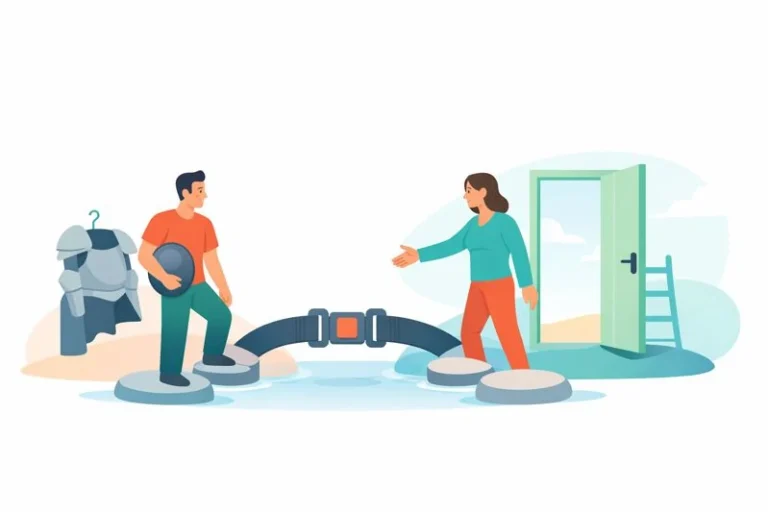
Table of contents:
Trustfulness: what this quality really looks like in ordinary life
It starts with a generous first read
Trustfulness is the habit of assuming, at least at first, that most people are not trying to fool you, embarrass you, or sneak emotional poison into the group chat. A trustful person gives others a little moral credit before the evidence says otherwise. Not because they think everyone is a saint. Please. They just begin from, "You're probably okay," rather than, "Convince me you're not a problem."
And that first assumption changes a lot more than people think. It changes your tone. Your face. Your body language. The way you ask a question. Whether you sound curious or like a tired detective who's had too much coffee and no joy. People with healthy trustfulness often seem calmer, more direct, easier to talk to, simply because they're not burning half their attention scanning for hidden motives.
It looks open, but not spineless
This part matters: trustfulness is not gullibility. Gullibility ignores evidence. Trustfulness sees evidence just fine, it just doesn't treat suspicion like a personality trait. A trustful person can still notice red flags, lock the front door, read the contract, ask a follow-up, say no, leave the weird date early. They're open, not floppy.
In real life, that openness shows up in small ordinary ways. They let a colleague handle their part of a project without hovering like a drone. They believe a friend who says, "Sorry, I forgot," unless forgetting starts showing up so often it deserves its own office. They hear clumsy wording and don't instantly label it cruelty. That softer first interpretation keeps a lot of relationships from becoming brittle for no good reason.
It helps people connect faster
Trustful people often build rapport quicker because they send a quiet message: you do not need to wrestle me just to be seen as reasonable. That changes the whole feel of a conversation. It also overlaps with empathy, because when you assume decent intent, you can look at people with more curiosity and less suspicion. That kind of steadiness is closely connected to emotional intelligence, because noticing your own reactions without letting them run the whole interaction gives other people more room to be human. And that, funny enough, makes them more likely to relax and be honest.
Others usually feel less judged around someone trustful. Less tested. Less like they're filling out an invisible application for basic goodwill. At work, that can make teams smoother and more reliable, because trust makes handoffs easier and communication cleaner. In private life, it helps friendship and intimacy move past polite small talk and into real life the messy, interesting stuff. You stop relating like two diplomats negotiating a border dispute over brunch.
It still needs a backbone
The strongest kind of trustfulness has brakes. It is not blind faith. It's more like hopeful discernment: you begin open, then you update based on reality. This is where logical thinking matters, because it helps you separate what actually happened from what fear is whispering happened. Very useful distinction.
If someone lies, manipulates, dodges responsibility, or treats your openness like free access to your time and energy, trustfulness is not supposed to keep smiling sweetly into the void. It's supposed to say, "Okay. I have new information now." That's healthy. That's adult. Trustfulness and caution are not enemies, really. One keeps your heart from turning into a locked garage. The other keeps you from handing the keys to every passing raccoon in a blazer.
What changes when trust comes a bit more easily
Relationships warm up faster
When trustfulness grows, people usually feel the shift before they can explain it. Conversations get less tight in the shoulders. New people stop feeling like puzzles you have to solve before you're allowed to exhale. You ask cleaner questions. You listen without mentally preparing your closing argument. A bit of tolerance helps here too, especially when someone's wording is awkward but their intention is probably harmless. Not every clumsy sentence is a character reveal.
This changes friendship, dating, family dynamics everything, really. A trustful person is easier to get close to because they are not constantly bracing for disappointment in act two. Sure, they can still get hurt. Everyone can. Real closeness always comes with some risk, which is annoying but true. Still, they don't make connection pay in advance for damage it hasn't done yet. That alone can turn emotional life from stiff and watchful into something much more alive.
Work gets lighter because control loosens its grip
At work, low trustfulness often dresses itself up as "high standards." And sometimes that's accurate. Sometimes. Other times it's just fear holding a clipboard and calling itself professionalism. When trustfulness gets stronger, delegation stops feeling like a small moral crisis. You can let a teammate do their part without checking in every eleven minutes. You can let someone newer try, wobble a bit, learn, and survive it. Imagine.
That makes collaboration faster and less exhausting. It works especially well when trust is paired with diligence, because steady effort turns goodwill into something solid. Teams with more trust share information earlier, ask for help sooner, and waste less energy on defensive little performances. And for you personally, it frees up mental bandwidth. You stop spending so much fuel monitoring people's intentions, competence, tone, vibe, probable hidden agenda, maybe lunar phase. Your nervous system gets to clock out a bit.
Your nervous system stops treating ambiguity like a fire alarm
There's a quiet emotional benefit here that doesn't get enough attention. Trustfulness reduces the amount of everyday uncertainty your mind labels as danger. A short reply is not automatically rejection. A mistake is not automatically sabotage. Someone being distracted is not automatically disrespect. That shift doesn't make you naive. It makes you less tired.
People who struggle with trustfulness often live with a low hum of vigilance. Not full panic more like constant internal checking. What did they mean by that? Why did they phrase it like that? Are they pulling away? Are they fake? It's exhausting, right? Trustfulness lets neutral explanations back into the room. More oxygen, less smoke. Sometimes that's the whole miracle.
People often rise to the trust they're given
Here's something oddly beautiful: being trusted changes how people behave. Not always. Not magically. Not in every human with Wi-Fi. But often enough to matter, people become more responsible, more sincere, more invested when they feel someone genuinely believes in their intentions. Children do. Partners do. Friends do. Employees do.
When you offer trust wisely, you're not only making life easier for yourself. You're helping create a relationship where honesty is more likely to happen. Suspicion tends to make people defensive. Trust, offered with self-respect, can make them stand a little taller. Have you seen that happen? It's one of those tiny human miracles that feels almost embarrassing to admit and yet, there it is.
What low trustfulness tends to do behind your back
Neutral things start feeling weirdly hostile
When trustfulness is weak, the mind picks up a nasty habit: it fills in blank spaces with threat. A delayed reply becomes disrespect. A forgotten detail turns into evidence. A clumsy sentence starts to feel like a deliberate jab, just with poor grammar. On the outside, you may function perfectly well. Inside, though, there's a lot of extra interpretation going on, and most of it leans dark.
The real problem isn't only accuracy. It's the cost. If your brain keeps reading ordinary ambiguity as danger, you never fully rest around people. You stay half-defended, half-ready, half-writing your rebuttal. Yes, that is too many halves. That's kind of the point. Over time, relationships start to feel more draining than nourishing, even when the people in your life are mostly decent.
Control becomes a coping strategy
Low trustfulness often turns into control. You double-check. Follow up. Monitor. Rehearse. Confirm. Keep backups of backups. Then feel mildly offended that other people are not operating with your level of vigilance, as if everyone should be preparing for emotional weather alerts at all times. In the short run, this can look competent. In the long run, it can make you difficult to work with and oddly hard to relax around.
It also creates a kind of hidden loneliness. If you never really trust, you never really lean. You keep yourself in charge because being in charge feels safer than being disappointed. Very understandable. Also very tiring. The world becomes something you must manage, not something you get to live in. And control lovely little illusion that it is is not a substitute for connection.
Closeness stays thinner than you want
You can't build deep relationships while quietly assuming people will misuse your openness the second you blink. You can build politeness, sure. Efficiency. Charm, even. But not real closeness. Real closeness requires a willingness to believe that another person might handle your honesty with care. Without that willingness, you keep offering edited versions of yourself and calling it intimacy. Oof, yes.
This is where people get tangled. They think the problem is that others are distant, unreliable, unavailable, hard to read. And sometimes that's true. But sometimes the bigger issue is that they themselves have made trust almost impossible. Not because they're cold. Because they're armored. There's a difference. Armor protects, and thank goodness for that sometimes. It also prevents touch. Both things are true at once, which is deeply inconvenient.
Old pain starts driving current decisions
A lack of trustfulness is often less a flaw than a scar pattern. Someone lied. Someone broke a promise. Someone used your softness against you, or made you feel foolish for having any. So your nervous system learned very sensibly that openness can be expensive. Then it carried that lesson forward a little too faithfully. Now new people keep paying for old people's nonsense. Rude, but common.
If that sounds familiar, it helps to name it honestly. Suspicion can feel smart when it's really grief, betrayal, humiliation, or old fear wearing a sensible jacket. And when that old fear keeps pushing you to pull back from good people, over-control every interaction, or assume failure before connection has a chance, it can start looking a lot like how self-sabotage quietly shrinks a life, even if on the surface it still seems like you're just being careful. Because the habit feels protective, most people don't question it until the costs become obvious: strained work relationships, micromanaging, chronic doubt, awkward distance, missed support. And then the real question isn't just, "Am I safe enough?" It's, "How much life am I losing by expecting the worst first?" Not a comfy question. A useful one, though.
How to build trustfulness without turning into an easy mark
Start with tiny transfers of trust
Please do not begin by handing your savings account and childhood diary to the nearest charismatic person with excellent shoes. Start small. Give away one pocket of control you usually grip too tightly. Let a coworker finish something in their own style. Let your partner choose the plan without your helpful little commentary from the sidelines. Let the barista make the drink without watching like you're supervising a moon landing.
The task itself isn't really the point. The feeling is. Notice what rises in you when you are not overseeing everything. Tension? Irritation? That itchy urge to "just check one thing"? Stay with it for a minute. Trustfulness grows when your body learns that releasing control does not automatically end in disaster. Sometimes it ends in a slightly different spreadsheet. Sometimes in oat milk. Life goes on.
Slow down suspicious interpretations
When something feels off, pause before writing a six-episode detective series in your head. Ask yourself for three possible explanations, not one. For example: "They replied late." Possible meaning one: they're avoiding me. Possible meaning two: their day exploded. Possible meaning three: they saw the message, meant to answer, and then life did that very human thing where socks, emails, errands, stress, and one random notification swallowed the whole afternoon.
This is not fake positivity with a motivational poster face. It's mental flexibility training. Low trustfulness loves certainty especially gloomy certainty. By deliberately making room for other explanations, you weaken the habit of treating every unclear signal as proof of bad intent. You don't have to become sunny. Just less automatic.
Say trust out loud once a day
Trust becomes more real when it leaves your head and enters the room. Once a day, say one simple trust sentence to someone. "You've got this." "I trust your judgment here." "Try it your way first I'm curious." Tiny lines, but they do something. They communicate belief. They also reveal, sometimes painfully, how hard it may be for you to offer belief without immediately attaching supervision, disclaimers, and three footnotes.
If this feels awkward, good. Awkward usually means the muscle is weak, not useless. Keep it light. No grand speeches under dramatic lighting. Just one honest sentence that tells another person and your own nervous system that trust is allowed here.
Practice low-risk openness with actual humans
Trustfulness isn't only about believing others. It's also about letting yourself be seen, a little. Share one true thing you usually keep wrapped in plastic. Nothing huge is required. "I've been more tired than I admit." "I'm strangely nervous about this meeting." "I could use help with that." Then pay attention to what happens. Not what fear predicts what actually happens.
You can use public life as a training ground too. Have a brief warm exchange with someone you'd normally treat like part of the furniture of your day: the cashier, delivery driver, receptionist, neighbor in the elevator. Smile. Say something kind. No performance, no weird forced intimacy, just human acknowledgment. These tiny moments can gently retrain the brain to expect decent contact instead of coldness by default.
Keep a file called proof
Write down moments when trust was deserved. A friend kept your confidence. A colleague delivered without needing to be chased. A stranger helped without trying to get something back. Your sister showed up when she said she would. Save those moments somewhere notes app, journal, back of a receipt, whatever works.
Then read them when your brain starts shouting that people are shady, civilization is one long scam, and no one can be relied on except maybe your dentist. Hurt is loud. Reliable people are often, bless them, a little boring. The mind remembers betrayal with neon lights and dramatic music. It forgets ordinary decency because ordinary decency tends to arrive quietly, in sensible shoes. Your proof file corrects that bias. Not to make you naive. Just to remind you that honesty is not folklore.
Should trustfulness be your next growth focus?
Not for everyone. Not right this second, anyway. Some people truly would benefit from growing trustfulness. Others are living in environments that are genuinely chaotic, manipulative, or wildly inconsistent, and their first task is not "trust more." It's boundaries. Discernment. A sturdier spine. Fair enough.
That's why it helps to choose your next area of growth carefully instead of grabbing whichever trait sounds noble on paper. And if what keeps you guarded is not people themselves but uncertainty, it may be worth asking whether fear of change is the thing you need to work on first, because sometimes distrust is really an attempt to avoid the discomfort of the unknown. If your main struggle is not suspicion but endless hesitation, action orientation may be the more useful place to start, because some people do not need more trust so much as more movement. If your real pattern is hypervigilance, micromanaging, emotional distance, or assuming bad intent every time a situation gets blurry, then trustfulness may be exactly the knot worth loosening. In some cases, the issue is less distrust and more people-pleasing, where staying agreeable keeps you from noticing what you actually feel or need. And if your bigger problem is saying yes to obviously unreliable people... well, then trustfulness is probably not the first lever to pull.
If you want something more useful than guesswork and vague self-promises, AI Coach can help you figure out whether trustfulness is really the next skill to work on and what first steps make sense in your situation. It gives you a practical way to see which quality deserves attention first, plus a simple plan for the first three days. Which, honestly, is often far more helpful than declaring you'll become a whole new person by Monday.
Frequently Asked Questions (FAQ)
What is trustfulness in simple terms?
Trustfulness is the tendency to assume that most people are basically honest and reasonably well-intentioned until reality gives you a reason to revise that view. You start open rather than guarded. Not careless, not blind just open. In everyday life, that means giving people a fair first read instead of treating every unclear moment like a warning siren.
Is trustfulness the same as gullibility?
No. Gullibility ignores warning signs and keeps believing even when reality is practically waving a frying pan in your face. Trustfulness is more balanced. It begins with goodwill, but it still updates based on behavior. A trustful person can notice patterns, draw boundaries, and step back when needed. Healthy trustfulness has eyes open.
Why do some people struggle to trust even when they want close relationships?
Usually because the nervous system learned that closeness can be costly. Betrayal, inconsistency, manipulation, humiliation, broken promises those experiences teach a person to stay guarded long after the original situation is over. Then the mind starts calling that guardedness "being realistic." Sometimes it is realistic. Sometimes it's old pain writing current rules. Big difference.
Can trustfulness be rebuilt after betrayal?
Yes, but usually not through one dramatic leap. It tends to return through smaller experiences: letting decent people be decent, noticing who is consistent, risking modest honesty, and updating your expectations from present evidence instead of old fear alone. Rebuilding trustfulness is less about suddenly becoming fearless and more about learning, repeatedly, that not everyone handles trust the same way.
How do I know whether I am wisely cautious or just overly suspicious?
A good clue is what happens in ambiguous situations. Wise caution asks for more information. Over-suspicion rushes to a negative conclusion and feels strangely certain about it. Another clue is pattern. If you often feel tense, controlling, hard to reassure, and emotionally worn out around people who have not actually given you strong reason to distrust them, suspicion may be sprinting ahead of evidence.
Does trustfulness matter at work, or is it mostly a personal-life thing?
It matters at work a lot. Trustfulness affects delegation, teamwork, speed of communication, willingness to ask for help, and how much micromanaging lands on the table. Someone who can trust reasonably well tends to collaborate more smoothly and create less defensive friction. Of course trust at work should be earned over time. Still, if you begin from total suspicion, every shared project gets heavier than it has any right to be.
What is the difference between trustfulness and trustworthiness?
Trustfulness is about your willingness to trust. Trustworthiness is about whether other people should trust you. One describes how you approach others. The other describes how dependable, honest, and steady you are yourself. Ideally they grow together. Though yes, life is full of people demanding trust while behaving like a lost luggage carousel. Not the same thing.
Can trustfulness be a personality trait, or is it something you can train?
Both. Some people seem naturally more trusting from the start, probably because of temperament and early experience. But trustfulness is also trainable. You can practice giving small amounts of trust, loosening automatic suspicion, speaking trust out loud, and collecting evidence that people are not universally awful. The starting point varies. The skill can still grow.
How can I help a child become trustful without making them naive?
Teach warmth and discernment together. Model friendliness, kindness, and a basic belief in people, while also teaching the child to notice behavior, ask for help, and respect boundaries. You want them to learn, "Most people are okay, and I can still be careful." Children do well with simple rules: check with trusted adults, notice how someone makes you feel, understand that kindness does not cancel common sense. That balance matters.
What is one small daily practice that strengthens trustfulness?
Pick one interaction a day and deliberately lead with goodwill. That might mean assuming a neutral explanation instead of a hostile one, letting someone handle a task without hovering, telling a person you trust their judgment, or having a brief warm exchange with a stranger. Tiny reps count here. Trustfulness grows less through big declarations and more through repeated moments where openness survives contact with real life.
Can too much trustfulness become a problem?
Absolutely. If trustfulness loses its backbone, it slides into naivety, denial, and weak boundaries. Then people can take advantage of your openness, and you may end up calling obvious patterns "giving chances" long after the situation has become ridiculous. Healthy trustfulness is generous, not helpless. It gives first credit, then watches what people do with it. Small difference on paper. Huge difference in life.