
Tolerance is the skill that stops other people's differences from landing on your nervous system like an insult. When it's weak, a different opinion, accent, lifestyle, age, religion, or political view can get under your skin way more than the moment actually warrants. And then, somehow, every room feels smaller. Every chat with the "wrong" person becomes a private little eye-roll Olympics. Fun? Not especially.
When tolerance gets stronger, life opens up. You no longer need everyone to mirror you in order to stay steady, kind, and sane. Which is, honestly, wildly useful in a world full of people who did not ask for your approval before becoming themselves.
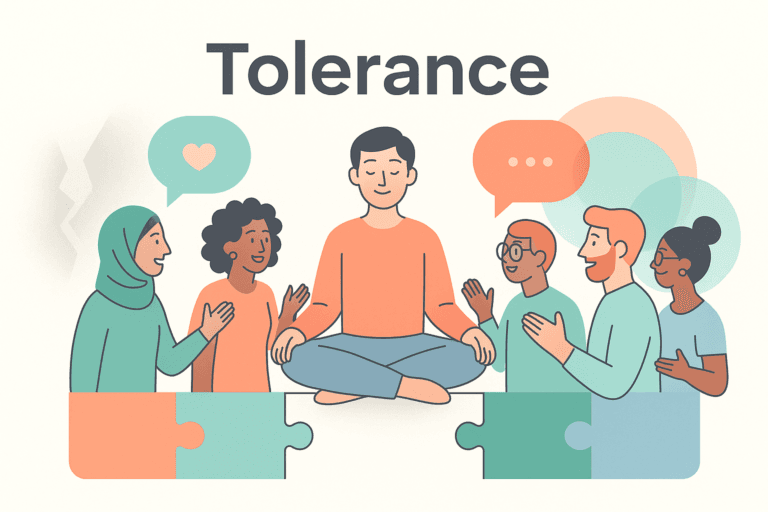
Table of contents:
Tolerance means making room for people you did not design
It is not agreement in a nicer outfit
A lot of people hear tolerance and picture someone smiling with the emotional energy of a tired receptionist, nodding at everything, saying, "Well, everyone's entitled to their truth," while dying a little inside. That's not tolerance. That's social anesthesia.
Real tolerance does not mean approving of every belief, habit, taste, or worldview you run into. It means you can meet difference without instantly turning it into disdain. You can say, "That's not how I see it," or "That choice isn't for me," and still keep your respect intact. No sneer. No cheap shots. No acting like another human is somehow tacky wallpaper just because they live differently. Very often, what gums up the whole thing is arrogance - that quiet, smug assumption that your way is the default setting and everyone else is a weird update nobody asked for. Hard to connect from there, obviously.
It notices who is left out
In everyday life, tolerance shows up less in lofty speeches and more in tiny social moments. Who gets talked over? Who gets ignored in the group chat? Who is new, awkward, older than everyone else, younger than everyone else, from another country, dressed differently, or speaking just a bit more slowly while everyone pretends not to notice? Tolerant people notice. They don't only "believe in inclusion" in some abstract, poster-friendly way - they make room for people in real time.
Sometimes it looks almost boring, which is partly why it matters. Inviting the quieter coworker into the discussion. Explaining the local joke to the newcomer instead of letting them stand there with that polite half-laugh we all know too well. Asking someone with a different background how things are usually done where they come from. Small moves, big message: you don't have to become a copy of us to belong here. And tell me that doesn't change the air in a room.
It stays curious longer than most people do
Another part of tolerance is staying curious a little longer than is comfortable. You hear something unfamiliar and, instead of jumping in to correct it, you pause and wonder: what kind of life would make this view feel sensible to someone? Not because every view is equally smart. Come on, some ideas are a mess. But people rarely build their beliefs out of thin air. Family, culture, fear, faith, class, history, loneliness, survival - all kinds of invisible furniture are already in the room.
Tolerant people don't have to move that furniture into their own house. They just don't pretend it isn't there. This is also where logical thinking becomes surprisingly humane: it helps you separate your first emotional jolt from what's actually happening, so you can examine an idea without flattening the person attached to it.
It works best when it has a spine
This part matters more than people think. Tolerance without boundaries turns into mush. Healthy tolerance does not ask you to smile your way through cruelty, manipulation, or abuse like some exhausted saint in a cardigan. It does not forbid moral judgment. It forbids lazy dehumanizing.
You can reject harmful behavior and still remember there's a person in front of you, not a cartoon villain built from your irritation. So yes, tolerance is warm. But it's not floppy. It's the ability to stay decent, open, and socially intelligent while difference is sitting right there at the table. Rarer than we like to admit, if we're being honest.
What gets better when you stop treating difference like danger
Conversations get less brittle
When tolerance grows, not every disagreement feels like a referendum on your worth. That changes everything. You listen longer. You interrupt less. You stop behaving as if one odd opinion over dinner means civilization is collapsing into the bread basket. Arguments still happen, sure, but they become less theatrical and more useful. Less performance, more actual understanding.
This matters in families, friendships, dating, work, neighborhoods - basically anywhere humans spend enough time together to become mildly annoying. Which is most places. A tolerant person can stay in contact with someone who isn't perfectly aligned with them, and that's lucky, because "perfectly aligned" describes almost no one.
You learn from people you would otherwise dismiss
Low tolerance filters out useful information before it even gets a fair shot. Someone sounds different, votes differently, dresses differently, believes differently - and click, the shutters come down. Tolerance keeps them open for another beat. That means more learning, better questions, and a wider sense of how people solve problems, build families, handle grief, celebrate, work, pray, adapt. Life is bigger than your own lane. Slightly annoying news for the ego, fantastic news for growth.
Sometimes the payoff is practical: you pick up a smarter idea. Sometimes it's more internal: you realize your way is a way, not the way. That can sting a little, like finding out your "foolproof system" is just one system among many. Still healthy. And it's much easier to stay open when that openness is backed by confidence, because people who feel solid in themselves don't need every disagreement to turn into an identity emergency.
Groups become more welcoming, not just more polite
There's a social payoff too. Tolerance helps create spaces where people don't have to sand off half their personality just to fit in. In a team, that means newcomers settle faster. In a friend group, it means the odd one out doesn't have to do all the emotional translation work. In a community, it lowers that chilly, weird feeling of, "You can stay, but only if you become more like us."
And when people feel safer, they contribute more. Often that feeling is strengthened by friendliness that is alive in a person, because acceptance is rarely announced - it's felt in tone, attention, eye contact, the little everyday gestures. People speak up sooner. They offer better ideas. They hide less. Inclusion isn't just morally nice, though yes, it is. It also makes groups sharper, warmer, and much less awkward. Which, frankly, should sell it already.
Your inner world gets less crowded with irritation
One underrated benefit of tolerance is emotional relief. If difference stops tripping your internal alarm every five minutes, your nervous system gets a break. You waste less energy silently judging strangers. Less time replaying someone's bizarre opinion in the shower as if you're preparing for a rematch that will never happen. Less attention spent proving that your slice of humanity is the normal one.
That frees up space for steadier qualities: patience, humor, discernment, self-respect. You stop needing so much sameness from the world in order to feel okay. And that's a quiet kind of freedom, really. The kind that makes a person easier to live with - including for themselves.
The hidden cost of low tolerance
Difference starts feeling like disrespect
When tolerance is thin, the mind makes a jumpy little mistake: it reads "not like me" as "against me." Someone speaks more bluntly than you like, believes something you can't stand, parents differently, eats differently, prays differently, loves differently - and suddenly you're not just noticing difference, you're bracing against it. That's exhausting. It's like walking through ordinary life with your shoulders half-raised all the time.
It also leads to odd overreactions. A simple conversation turns prickly. You assume bad intent before the facts really justify it. You stop asking and start labeling. And once the labels arrive, curiosity usually grabs its coat and leaves. A little trustfulness from the inside out can interrupt that spiral, because it reminds you that difference is not automatic proof of hostility. That one shift, small as it sounds, makes honest conversation far more possible.
Your social world quietly shrinks
Low tolerance narrows your world in sneaky ways. You drift toward people who sound right, think right, react right, joke right. Familiarity feels safer, so your circle becomes more uniform. On some days that can feel comforting, sure. Over time, though, it makes a person rigid. Less adaptable. If that pattern feels uncomfortably familiar, learning how can I develop adaptability can make it easier to stay open when people, situations, and expectations do not match your usual script. Less graceful in mixed rooms. Less able to function when life gets, well, real. And if some of that rigidity comes from needing people, conversations, and outcomes to stay neat and correct, it helps to see why perfectionism is less about excellence than about danger, because the fear of mess often sits underneath both perfectionism and intolerance. That kind of narrowing has a lot in common with how self-sabotage quietly shrinks a life, because the comfort that protects you in the moment can quietly start limiting who you become.
The cost isn't only social. It's developmental. You miss relationships that might have stretched you in good ways. You miss ideas that could have corrected your blind spots. You end up eating the same mental meal over and over and calling it depth. A bit stale, no?
Conflict becomes too easy to trigger
People with low tolerance often spend more time irritated than they realize. Not dramatic rage all day long - more like lots of small spikes: contempt, sarcasm, dismissiveness, that cool icy tone that says, "I've already decided what kind of person you are." It leaks everywhere. Work meetings. Family dinners. Group chats. School pickup lines. Comment sections, obviously. The whole thing starts smelling faintly of tension.
And here's the rough part: once people expect that reaction from you, they stop bringing you nuance. They give you the safe version. The edited version. The version that won't set off the tripwire. So your relationships get flatter right when you most need honesty. That's a painful trade, even if nobody says it out loud.
Other people stop feeling welcome around you
This is the emotional heart of it. A low-tolerance person can make a room feel cramped without ever saying anything openly cruel. A smirk. A dismissive laugh. Never asking the new colleague a real question. Talking about people from other groups instead of with them. Kids notice. Partners notice. Coworkers absolutely notice. In families, teams, and friend groups, that kind of atmosphere can slowly push people into when the brain learns to say "why bother", where staying quiet starts to feel safer than being real, and the relationship loses honesty long before it fully loses contact.
Then something sad happens. People either perform sameness around you or they back away. And if you've ever wondered why others seem guarded, bland, strangely formal in your presence... well. That's a thought worth sitting with for a minute. Sometimes the issue isn't that people have no depth. Sometimes they just don't feel safe enough to show it.
How to stretch this skill in real life
Try a no-conversion conversation
Once a week, talk with someone whose views or background differ from yours, and make one rule before you start: you are not there to win. You are not there to deliver a perfect rebuttal from the Mount of Correctness. You're there to understand how their thinking got built. Fifteen minutes is enough. Ask what shaped their view, what experiences matter to them, what people usually get wrong about it. Then stay with the answers a little longer than feels natural.
If that feels weirdly difficult - good. That's information.
Borrow another person's lens for one evening
Read a memoir excerpt, watch a thoughtful interview, or listen to a podcast from a perspective you'd normally sidestep. Not rage-bait. Not some clip engineered to make everyone foam at the mouth in the comments. Something human. A refugee story. A veteran you disagree with. A religious person if you're secular. A secular person if you're religious. Afterward, write down one fear and one value you could understand, even if your actual position didn't change.
That's the point, really. Not conversion. Contact.
Show visible respect for unfamiliar taste
Tolerance gets stronger when respect becomes behavior, not just a nice private opinion you imagine yourself having. This week, offer one sincere bit of appreciation to someone whose style, taste, or habits are not naturally your thing. Maybe you love minimalist clothes and your coworker dresses like a disco ball with bills to pay. Fine. If there's creativity there, say so. If someone cooks food you're not used to, ask about it with interest instead of doing that tired little joke people always do when they're nervous around unfamiliar things.
You're training your mind to notice value before sameness. That's a bigger shift than it sounds.
Slow your rebuttal down on purpose
The next time you feel that hot urge to interrupt, correct, or swat someone's opinion out of the air like an annoying fly, delay yourself by one beat. Let them finish. Then paraphrase what you heard before you answer. Not in a fake, smug therapist voice. In a normal one. "So if I'm getting you right, you mean..." It works so well it's almost irritating.
A lot of intolerance is just fast defensiveness wearing smart clothes. If that pattern feels familiar, learning how to master proactivity in 5 powerful ways can help, because reacting less impulsively is often the first step toward treating difference with more steadiness. Slowing down exposes it. And if you notice you are especially sharp when you are rushed, overloaded, or already mentally late, that is worth paying attention to as well. Building time management without the corporate varnish can create more space for patience, because people are much easier to meet with respect when your nervous system is not treating every interaction like a delay.
Repair one rough moment and make one welcome gesture
If there's someone you were unnecessarily sharp with during a disagreement, clean it up. No grand dramatic essay required. A simple message is enough: "I still see this differently, but I was harsher than I needed to be." Then, in that same week, do one small thing that helps someone feel included. Invite the new hire to lunch. Ask the older neighbor about their story. Pull the quieter person into the thread instead of leaving them parked at the edge like forgotten luggage. If insight is not the problem but follow-through is, building a bit of action orientation without turning into a chaos goblin can help, because tolerance grows faster when good intentions become visible habits instead of staying trapped in your head.
Tolerance grows through repetition. Little reps, little reps, then one day you notice you're less reactive and more human. Nice surprise, that. And like most meaningful changes in character, it deepens through discipline more than bursts of inspiration, so small repeatable actions usually matter more than one dramatic promise to become a new person by next Tuesday.
Is tolerance really your next growth task?
Not for everyone. Some people genuinely need more tolerance. Others already tolerate far too much and actually need firmer boundaries, clearer values, or the courage to stop appeasing everybody in the room. If you're forever swallowing your own needs just to seem "nice," tolerance is probably not the missing piece. If that sounds familiar, take a look at when caring turns into self-erasure, because losing yourself in the name of keeping the peace can masquerade as tolerance while quietly draining your boundaries. Something else is wobbling.
It helps to look at your real pattern, not the most respectable-sounding skill on the list. Do you tense up around difference? Do arguments turn sharp fast? Do people unlike you feel irritating before they feel interesting? Then yes, this quality may deserve real attention. If your bigger issue is exhaustion, chronic stress, or weak boundaries, start there first - otherwise you'll end up polishing the wrong floorboards, which is a very human mistake but still, inconvenient.
If you want a clearer way to sort that out, AI Coach can help. It can point you toward the skill that matters most right now and give you a simple plan for the first three days. Which is often more useful than vaguely deciding to "work on yourself" and then, five hours later, getting distracted by laundry and a half-dead houseplant.
Frequently Asked Questions (FAQ)
Why do some disagreements feel strangely personal, even when the topic is ordinary?
Because the brain often ties beliefs to identity, belonging, and safety. So when someone challenges a view, it can feel less like "we see this differently" and more like "my people, my values, my place are under attack." Tolerance helps separate disagreement from humiliation. That separation is huge.
Is tolerance a real strength, or just a softer form of conflict avoidance?
Real tolerance is a strength. Conflict avoidance hides, nods, and hopes the tension dissolves on its own like cheap sugar in tea. Tolerance stays present. It can hear something uncomfortable, remain respectful, and still speak honestly. Very different energy.
Where is the line between tolerance and betraying yourself?
The line is boundaries. Tolerance asks you to respect human dignity and make room for difference. It does not ask you to abandon your values, accept abuse, or pretend harmful behavior is fine. If your version of "tolerance" keeps costing you self-respect, then something has gone sideways.
Can a person hold strong beliefs and still be tolerant?
Yes. In fact, strong beliefs are often easier to hold calmly when they're not built on panic. A tolerant person can be deeply committed to their values while resisting the urge to mock, dehumanize, or instantly dismiss everyone who disagrees. Strong doesn't have to mean brittle.
Why do stress and exhaustion make people more judgmental?
Because stress shrinks psychological space. When you're overloaded, tired, or overstimulated, the mind gets less curious and more defensive. Difference feels harder to process. So sometimes what looks like a tolerance problem is partly a nervous-system problem in a trench coat.
What does tolerance look like in a workplace, not in a textbook?
It looks like including the quieter teammate, not mocking accents, not treating a new colleague like a walking inconvenience, and making room for different styles of thinking or communicating. It also means disagreeing without turning every meeting into a prestige contest. You know the kind.
How do I stay tolerant online when everything seems built to provoke me?
First, notice that many online spaces reward speed, outrage, and snappy contempt. Terrible recipe. Slow yourself down. Read longer-form material from actual people, not just inflammatory clips chopped into emotional confetti. And if you do respond, answer the real point - not the cartoon version your irritation invented in three seconds flat.
Can tolerance come back after a relationship has been damaged by contempt?
Sometimes, yes. Usually it starts with one honest repair: naming the harshness, owning your part, and rebuilding respectful conversation in smaller doses. Trust doesn't magically reappear because you used kinder words once. It comes back when the pattern changes. Slowly, a bit awkwardly, but still.
What are the early signs that my tolerance may be weaker than I think?
Quick irritation around "certain kinds of people," interrupting before someone finishes, joking in ways that regularly put others on edge, feeling superior instead of curious, and noticing that people edit themselves around you. Those aren't random quirks. They usually point somewhere, and not somewhere flattering.
How can parents model tolerance without becoming vague about values?
By doing both things at once: keeping clear values and showing respect toward people who live differently. Children learn a shocking amount from tone. You can say, "We don't believe that," without adding contempt, ridicule, or disgust. That distinction teaches more than a dozen lectures ever will - and probably with fewer eye-rolls, too.