
You know that flat little moment when everyone on the call goes quiet, the project is technically alive, but somehow it already feels half-dead? Or when a friend says, "I should really do this," and you can hear, almost physically hear, that they don't believe themselves for a second. That is often what weak motivational skills look like in real life: not a lack of goals, not a lack of talent, just no spark strong enough to turn intention into movement.
Motivational skills are the ability to wake people up a bit - sometimes yourself, sometimes the room. If things around you often stall, sag, or lose heart too easily, this quality may be the missing piece. And if that lands a little too neatly... well, good. We've got something useful to look at.
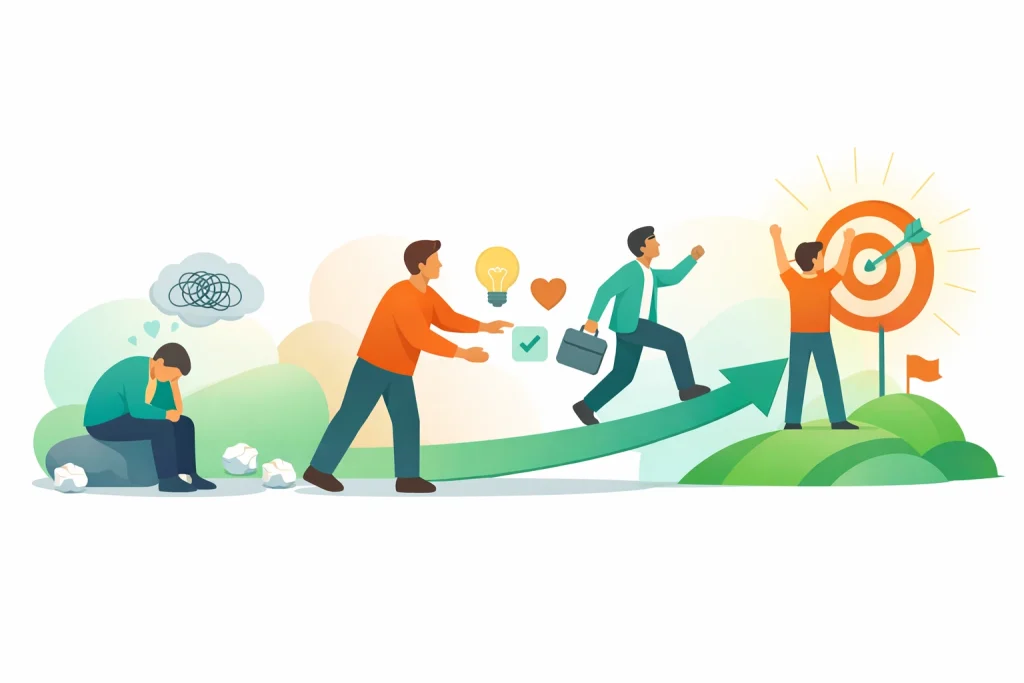
Table of contents:
Motivational Skills: The Human Art of Creating Movement
It is not hype, and it is definitely not shouting
When people hear "motivational skills," they often imagine a glossy person with a microphone, a giant smile, and far too much faith in sunrise metaphors. That version exists, sure. It is also not the point. Real motivational skill is much quieter and much more useful. It is the ability to help people reconnect with energy, meaning, and willingness - so action becomes easier to start and easier to sustain.
That can happen in a team meeting. It can happen in a kitchen. It can happen in one sentence sent at the right moment: "You are closer than you think." The skill is not about being loud. It is about being able to create forward motion. Sometimes with words. Sometimes with clarity. Sometimes just by showing up with a kind of alive, grounded conviction that says, "This matters. Let's go."
It begins with noticing what people care about
Strong motivators do not push buttons blindly. They listen first. They notice what matters to the other person, what they are afraid of, what kind of win would feel real to them. This is where a lot of people miss the plot. They try to motivate by talking more, when actually the first move is understanding more.
Psychology has been pointing in this direction for years. People tend to engage more when they feel three things: some sense of choice, some sense of capability, and some sense of connection. That is the backbone of self-determination theory. So a person with motivational skills is often good at bringing those conditions back into the room. They remind someone of their agency. They make the next step feel doable. They help the person feel less alone in the effort. That is not magic. It is skilled human contact. This is also where goal orientation quietly strengthens motivation, because once people can see what they are moving toward, their effort stops feeling random and starts feeling purposeful.
Language matters, but tone and timing matter too
Another trait of this skill is knowing how to say things in a way that lands. Not in a manipulative, "let me engineer your emotions" kind of way. More like: choosing language that gives oxygen instead of draining it. Compare "Come on, it's not that hard" with "Yeah, this is a lot, but you've handled hard things before." Same topic. Completely different effect.
People with motivational skills tend to be good at naming progress, framing struggle without drama, and turning vague pressure into a clearer path. They can say, "Let's just get the first draft ugly and honest," and suddenly the mountain becomes a staircase. That is a useful gift. Also, timing counts. Even good words can feel irritating if they arrive before the person has felt heard. Ever tried cheering up a grumpy cat before breakfast? Exactly.
Your own example is part of the message
Here is the part people forget: motivation is not only spoken. It is modeled. A person who brings energy, commitment, and visible belief into what they do often motivates others without making a speech at all. Their behavior says, "I'm in. This is worth doing." That signal travels.
So motivational skills usually show up as a mix of things: encouragement, emotional steadiness, expressive communication, optimism that does not feel childish, and the ability to keep attention on what is possible next. Not fantasy. Not pressure. Just momentum with a pulse. In groups, these people often become natural reference points. Others look to them not because they have a formal title, but because they make effort feel more meaningful and more possible. And honestly, in a tired world, that matters a lot.
What Starts Changing When You Can Light a Fire Without Burning People Out
Work gets less draggy, less "ugh, fine"
One of the first benefits of stronger motivational skills is simple: things stop stalling so easily. Tasks still take effort, deadlines still exist, the spreadsheet will not suddenly become poetry - but the emotional weight around action changes. People are more willing to start when someone can remind them why the work matters and what success actually looks like.
That makes a real difference in teams. A good motivator can take a foggy, heavy atmosphere and give it shape. Not by pretending everything is fun. By creating momentum. "This part is messy, yes. But if we get through it today, tomorrow gets easier." That sentence alone can rescue an afternoon.
People feel stronger, not merely managed
There is a big emotional payoff here. When someone motivates well, people usually feel seen rather than handled. They do not walk away thinking, "I got pushed." They walk away thinking, "Right. I can do this." That is a huge distinction. That is also why motivation works best when it comes with humility. If support starts sounding superior, people feel judged instead of strengthened, which is why learning how to work with arrogance and grow healthier confidence can make encouragement land with far more trust and warmth.
Good motivation increases confidence because it helps people remember their own capacity. It names evidence. It reflects back progress. It reminds a person that they are not starting from nothing. In personal life, this can deepen friendships, parenting, mentoring, and partnership. In work life, it improves morale in a way that generic praise never quite manages. "Great job, team" is nice. "You kept this moving when it would have been easier to drift" lands differently. Warmer. Truer.
Leadership becomes more believable
Plenty of people can assign tasks. Far fewer can help other people want to rise to them. That is where motivational skills quietly separate managers from leaders. If you can build belief, focus attention, and give people a reason to keep going when the novelty has worn off, your influence grows. Naturally, almost by accident. That influence also becomes more credible when it is grounded in integrity, because people trust encouragement more when the person offering it lives by the same standards they are asking others to meet. In practice, that is one of the clearest overlaps with leadership, because people rarely commit deeply to a task when they only receive instructions and never receive belief.
There is research behind that emotional ripple too. Feelings spread in groups more than we like to admit. A well-known study on emotional contagion in teams found that one person's mood can affect cooperation and performance across the group. Which is slightly terrifying, honestly, but also useful. If energy spreads, then grounded encouragement spreads too. A motivational person can change the climate of a room without theatrics.
Your own motivation gets steadier as well
This skill is not only outward-facing. Strange little twist: people who learn how motivation works with others often become better at generating it in themselves. They get better at reframing hard stretches, reconnecting to purpose, and speaking to themselves in ways that create movement instead of shame.
That matters on the bad days. Not the cinematic bad days - just the ordinary ones, when you feel dull, stuck, mildly cynical, and tempted to postpone everything until some mythical better mood arrives. Motivational skill helps you restart faster. It gives you language, perspective, and emotional leverage. Over time, that means less helplessness and more inner traction. If that heavy, passive feeling has become a pattern, it may help to notice how learned helplessness sneaks into ordinary life, because sometimes what looks like low motivation is really a quiet belief that your effort will not change much. You begin to trust that motivation is not only a thing you wait for. Sometimes it is something you know how to build.
When Motivational Skills Are Missing, Everything Gets Heavier Than It Needs To
Good ideas keep losing air halfway through
A lack of motivational skill does not always look dramatic. Often it looks like promising things that keep fading out. A project begins well, then energy dips and nobody knows how to revive it. A goal feels exciting on Monday and weirdly pointless by Thursday. A team agrees on the plan, but the spirit goes missing somewhere between the kickoff and the actual work.
This is frustrating because the problem is not always strategy. Sometimes the plan is fine. The people are capable. What is missing is emotional propulsion. Nobody is helping the effort stay connected to meaning, progress, or belief. So action becomes mechanical. And mechanical effort tires people out fast. Seen over time, this pattern often looks a lot like when diligence is missing, since even strong intentions fall apart when nobody can keep effort emotionally connected to the bigger why.
You start sounding correct, but not convincing
Some people have solid ideas and still struggle to move anyone with them. Why? Because information alone does not create commitment. If your message has no life in it, if you cannot connect the goal to something human, people hear the logic and leave the energy on the table.
This shows up at work all the time. Someone explains the task accurately, but the room still feels limp. A parent gives good advice, but the teenager hears only pressure. A friend wants to help, yet their encouragement sounds like a quote mug in a waiting room. Oof. Without motivational skill, communication can become flat, overly abstract, or unintentionally dismissive. You may be right and still fail to move anything.
Other people begin carrying the emotional load
When one person cannot generate or support motivation, somebody else usually has to compensate. A more energetic coworker keeps rallying the group. A partner keeps lifting the mood at home. Sometimes that pattern is less about kindness and more about people pleasing without the cute excuses, where one person keeps managing everyone's emotional weather because saying "I can't carry this for both of us" feels much harder. A friend keeps being the one who says, "Come on, don't disappear on yourself now." Over time, that imbalance gets old.
And it changes how people experience you. Not necessarily as unkind, but as hard to mobilize. Hard to warm up. Hard to follow. In collaborative settings, that can quietly limit trust. People gravitate toward those who can sustain movement, especially when a task is boring, uncertain, or emotionally inconvenient. Which, let's be honest, is a shocking amount of adult life.
Apathy and quiet shame creep in
There is an inner cost too. If you repeatedly fail to energize yourself or others, you can start telling a painful story about it. "Maybe I'm just not inspiring." "Maybe I always lose momentum." "Maybe I'm the person who starts but doesn't carry things through." Those stories stick. They flatten identity.
Then comes the secondary pain: envy of people who seem naturally energizing, annoyance at motivational language because it feels fake, or a habit of rolling your eyes before anything hopeful has a chance to breathe. That cynicism can feel protective. It is often just tiredness wearing sarcasm. Weak motivational skill does not only reduce results. It can also shrink hope, and that is the part worth taking seriously. A person can live a long time in that half-flat state without realizing how much it has been costing them.
How to Build Motivational Skills Without Turning Into a Walking Slogan
Make your encouragement specific or do not bother
Vague encouragement is pleasant wallpaper. Specific encouragement actually helps. So start there. Once a day, tell someone what you genuinely see in them and tie it to a concrete next step. Not "You're amazing." More like, "You've already done the hardest part of this report - now it's mostly cleanup," or "You explain things clearly when you slow down; use that in the meeting."
This trains two muscles at once: observation and useful language. It also makes your support more credible. People trust encouragement when it feels earned.
Ask for the real reason, not the polite reason
If you want to motivate well, learn to ask better questions. Try, "What would make this worth it for you?" or "If this goes well, what changes?" Then listen long enough for the real answer to show up. The first answer is often tidy. The second one has blood in it.
Motivation gets stronger when it connects to something personal: pride, relief, freedom, contribution, dignity, proving something to oneself. When you hear that layer, your support becomes sharper and less generic. You stop tossing pep-talk confetti and start speaking to what actually matters. This kind of listening also depends on tolerance, because people open up more honestly when they sense that their values, fears, and way of seeing the world will be met with curiosity rather than correction.
Name the next step in a way that gives people traction
A lot of demotivation is really overwhelm in a trench coat. The goal is too big, too blurry, too far away. So practice shrinking the field. In conversations, try helping people see the next meaningful move instead of the entire mountain. "Don't solve the whole launch today. Just draft the opening page." "You do not need to get fit by summer. Just show up on Wednesday."
Motivational skill often sounds like this: not larger pressure, but clearer action. You are turning panic back into movement. Lovely little trick, that.
Let people see your effort, not only your finished result
Another way to motivate is by example. Choose one hard or tedious thing this week and do it with visible steadiness. No performance, no humblebrag fog. Just honest modeling. Mention that you were unsure, did it anyway, and kept going when it got annoying.
This matters because people are often encouraged less by excellence than by witness. "I started before I felt ready" can be more energizing than a polished success story. It makes action feel available, not elite.
Practice reframing without sugarcoating
Once or twice this week, take a difficult situation - yours or someone else's - and offer a more energizing frame that still respects reality. "This is not proof you're failing; it's the messy middle." "You're not back at zero, you're carrying experience into a new round." "This quarter is rough, but it's also showing us exactly what needs fixing."
That last part matters. Reframing is not denial. If you try to motivate people by pretending a real problem is cute and harmless, they will smell it from across the room. Healthy motivation does not erase difficulty. It changes the meaning of difficulty so action feels possible again. Do that often enough and your presence itself becomes a resource. People leave conversations with more spine than they had when they came in, and that - honestly - is one of the kindest soft skills to have.
Is This the Right Skill for You to Work On Now?
Maybe yes. Maybe not. Not everyone needs to focus on motivational skills first. Some people are not lacking inspiration at all - they are lacking rest, boundaries, grief recovery, better planning, or the courage to admit they are already exhausted. If that sounds familiar, a lack of personal boundaries may be draining far more energy than you realize, which can make any attempt to "motivate yourself better" feel strangely ineffective. In that case, learning to "energize" harder may just decorate the wrong problem. Sometimes the real issue is not unwillingness but overload: too many choices, too many open loops, too much mental switching. If that sounds familiar, it may help to look at decision fatigue, because what feels like low drive is often a tired brain that has run out of clean energy for one more choice.
It helps to look at the pattern honestly. If your goals keep losing meaning, if people rarely catch your enthusiasm, or if you often care deeply but struggle to create movement in yourself or others, this skill is probably worth attention. But if your main issue is burnout, chronic self-doubt, or a life that is simply too overloaded, start there, or at least alongside it.
If you want a clearer read on what deserves your effort first, AI Coach can help you sort priorities and give you a simple plan for the first three days. Sometimes that is more useful than trying to improve everything at once and ending up, as people do, with six tabs open and no actual start.
Frequently Asked Questions (FAQ)
Are motivational skills the same as charisma?
No. Charisma is more about presence and social magnetism. Motivational skills are more practical. They involve helping people reconnect with purpose, capability, and action. A charismatic person may attract attention and still fail to move anyone toward something meaningful. A less flashy person can be excellent at motivation because they listen well, speak clearly, and know how to turn doubt into momentum. One is sparkle. The other is traction. Nice when both exist, but they are not the same animal.
Can introverts become good at motivating others?
Absolutely. You do not need stadium energy for this. Quiet people often motivate very well because they tend to observe closely, speak with more intention, and create trust one conversation at a time. Motivation is not a volume contest. It is about helping another person feel seen, capable, and willing to act. A calm sentence delivered sincerely can do more than ten loud ones. Some of the best motivators are steady, almost understated, and that is part of why people believe them.
How do I motivate someone without sounding fake or cheesy?
Stay concrete. Talk about what you actually see, what the person has already done, and what the next step is. Fake motivation floats above reality. Real motivation touches it. "You've handled this kind of client before - start with the first call" works better than "Believe in yourself!" unless you are being chased through a movie soundtrack. Also, match the person's emotional state. If they are frustrated, do not jump straight into sunshine mode. Meet them first, then lift.
What is the difference between motivating and pressuring?
Motivation increases willingness. Pressure increases tension. Motivation gives meaning, choice, encouragement, and a believable path forward. Pressure usually adds urgency, guilt, or fear. The first tends to build energy from the inside. The second tries to force motion from the outside. Psychology keeps finding that people engage more sustainably when autonomy matters, which is one of the central ideas in self-determination theory. In plain English: people move better when they still feel like humans, not machinery.
Why can some people motivate others but struggle to motivate themselves?
Because it is easier to see possibility from the outside than from the inside. With other people, you often have more perspective and less emotional fog. With yourself, fear, fatigue, shame, and old stories get involved. Suddenly the clean advice disappears into static. This is common, not weird. It helps to use on yourself the same tools you would use with someone else: specific encouragement, a smaller next step, a reminder of why it matters, and a less cruel tone. No one thrives under permanent inner heckling.
Do motivational skills matter if I am not a manager or team leader?
Very much so. You use them in friendships, parenting, partnerships, teaching, customer service, coaching, mentoring, community work - honestly, anywhere humans need encouragement to keep going. Even in solo work, motivational skill helps because you still have to create movement in yourself. Titles matter less than influence does. If people around you ever get discouraged, stuck, or unsure, this skill is relevant. Which is most of humanity by around Wednesday afternoon.
How do you motivate a team when morale is low and the workload is genuinely heavy?
First, do not insult people with fake brightness. If the load is real, say so. Then give three things: truth, meaning, and a manageable next target. "Yes, this is a rough stretch. Here is why it matters, here is what we can control today, and here is where I can support you." That works better than theatrical optimism. Group emotion is contagious, too. Research on emotional contagion in teams suggests mood spreads through the room and affects cooperation. So steadiness from one person can matter more than it seems.
Can motivational talk backfire?
Oh yes. It backfires when it ignores reality, when it becomes repetitive, when it is used instead of actual support, or when it makes people feel judged for being tired. Constant "Let's go!" energy can become exhausting if the speaker never listens, never adjusts, and never notices what the situation is actually asking for. Motivation works best when it is responsive. Sometimes people need a spark. Sometimes they need clarity. Sometimes they need sleep and a sandwich. Read the room.
What should I say when someone has lost confidence?
Start with evidence, not slogans. Remind them of something real they have already handled, something specific you trust in them, and one next step that is small enough to begin. You might say, "You are not as lost as this moment makes you feel. Last month you solved something harder than this. Let's just get the first part moving." Confidence usually returns through contact with reality, not through grand speeches. Keep it warm, but anchored.
How do I know whether my motivational style is actually helping?
Watch what happens after the conversation. Do people take action more readily? Do they seem clearer, steadier, more willing? Do they return to you because they feel stronger around you, not smaller? Good motivation creates movement and self-belief. Bad motivation creates temporary adrenaline, politeness, or eye-rolls people save for later. You can also ask directly: "Was that helpful, or did I miss what you needed?" Slightly vulnerable question, very useful answer. That is how the skill matures.